
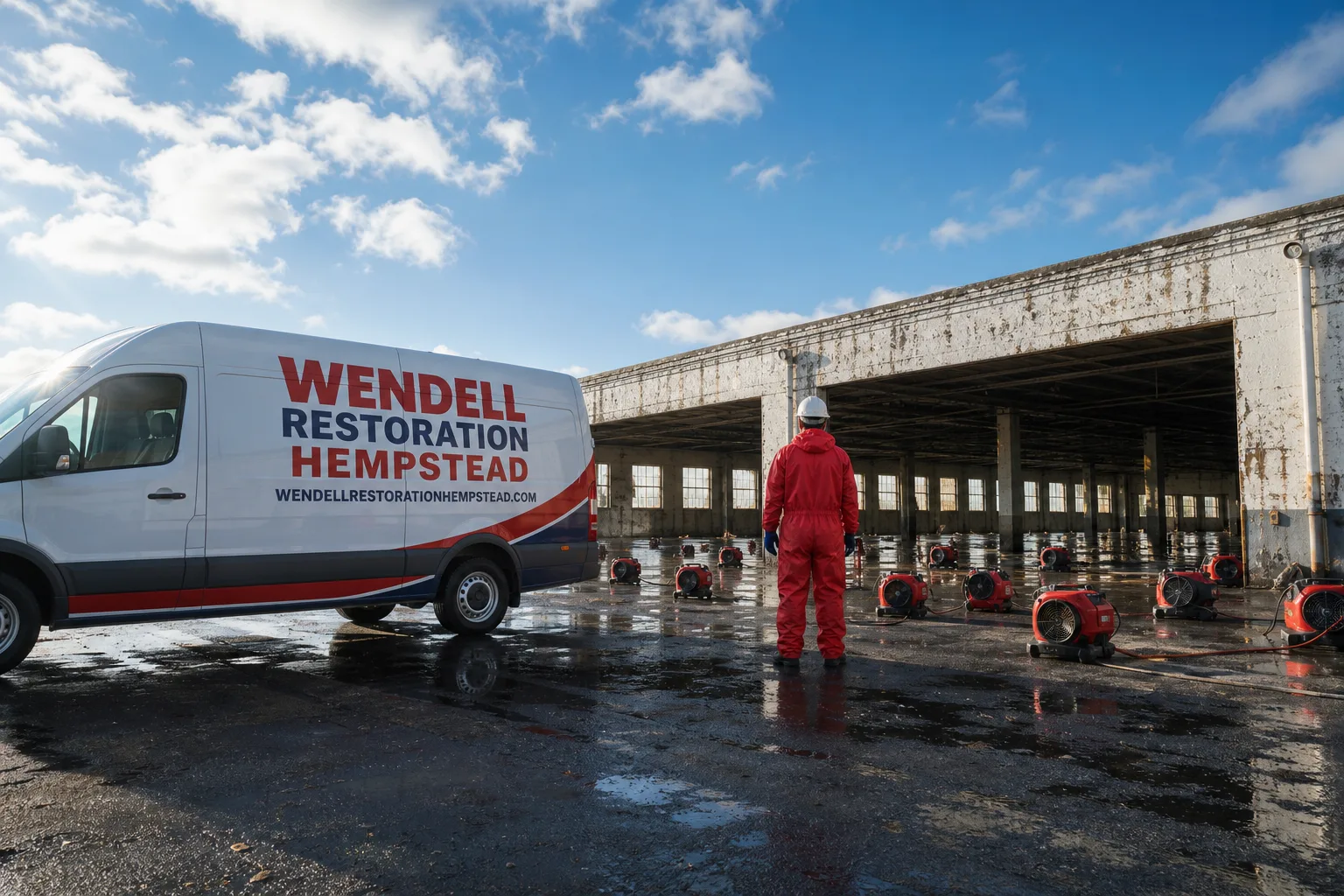
 Water damage drying
 Fire & smoke cleanup
 Mold remediation
 Storm response
 Sewage cleanup
 Reconstruction
Free visual inspection and a written scope of work before any mitigation begins - photos, moisture readings, and drying logs go in your claim file
The scope we write is the scope we bill. Anything new gets shown to you, in writing, before we touch it.
Get your free estimateFast, Reliable Water Damage Restoration Across Plainedge
Water damage in Plainedge rarely announces itself politely. It comes from a nor’easter pushing groundwater up through a 60-year-old slab, or a cast-iron supply line finally giving out under your kitchen floor, or an ice dam melting into the wall cavity above your dormer. You need someone who knows the difference between those failures, and you need them fast. Wendell Restoration Hempstead answers with a live person 24/7, gives you a written price before any work starts, and sends background-checked, uniformed technicians with a live arrival time you can track. Call (516) 559-6972 and you’ll speak to someone who knows Plainedge’s housing stock, not a call center reading a script.
Why Wendell Restoration Hempstead Is Plainedge’s Preferred Water Damage Restoration Company
We’ve spent years pulling water out of Plainedge’s mid-century Capes, ranches, and split-levels, and the failures here follow patterns you won’t find in Hempstead or Massapequa. Original cast-iron supply lines under 1950s slabs are at end of life. Split-level additions hide crawl spaces that freeze and burst. Renovated Capes leak at dormer intersections where the roof pitch changes. Our Water Damage Restoration team knows these failure points before they open a wall. Blake Sorensen leads our crews with the same standard on every job: IICRC, RIA, and IFA protocols, professional drying equipment from Dri-Eaz and Phoenix, and a written scope before we touch a single tool. Plainedge homeowners tell us the thing they value most is the price not changing at the door. That’s our rule, not our marketing.
Restoration work we handle
Flooded Basement in Plainedge
A flooded basement in Plainedge comes from three places: groundwater rising through slab cracks after heavy rain, a failed sump pump during a coastal storm, or a burst supply line in the crawl space or under the slab. The first thing our technicians do is check baseboard moisture. On the north side of Plainedge especially, water seeps up from the high water table through hairline cracks before any pipe has failed. If we skip that check, we might tear out the wrong wall. Basement water removal and structural drying for a typical Plainedge slab home runs $2,800 – $5,400 depending on how far the water has traveled under the slab and whether original hardwood is involved. We use Injectidry drying mats and Phoenix air movers to pull water from concrete, then log moisture readings until the slab is truly dry, not just surface-dry.
Slab Water Extraction and Drying
Psychrometric drying, which means tracking the air’s moisture level so we know when your home is truly dry and not just surface-dry, is the core of slab work. On a 1958 Cape Cod off Hempstead Turnpike, our crew traced a “burst pipe” call to groundwater wicking up through a hairline slab crack after a nor’easter. We ran moisture mapping across the slab, set containment, and used Injectidry drying mats with air movers to pull water from the concrete before antimicrobial treatment. The slab came back to pre-loss condition without tearing out the original hardwood.
Antimicrobial Treatment After Water Removal
When groundwater or category 2 water saturates a slab, we don’t just dry it. We treat it. Plainedge’s coastal plain means warmer, more humid conditions that accelerate mold growth once water stalls, so our drying logs include antimicrobial application and follow-up moisture readings for at least three days after extraction.
Water Extraction in Plainedge
Water extraction in Plainedge starts with knowing what you’re dealing with. A burst pipe in an uninsulated crawl space of a split-level addition is a different extraction than a nor’easter pushing groundwater up through a slab. We map the water first. Water extraction alone for a contained area, say 200 to 400 square feet, runs $1,500 – $2,800 in Plainedge and includes disposal of saturated materials and setup of drying equipment. If the water came from a cast-iron slab leak, extraction has to happen before we can even assess whether the pipe is repairable or needs replacement.
Crawl Space Water Removal for Split-Levels
Plainedge has a lot of split-levels with crawl spaces that were never insulated for Long Island winters. Freeze-thaw cycles burst supply lines in those spaces, and the moisture hides behind original paneling before our drying logs catch it. We bring in low-profile air movers and dehumidifiers sized for tight access, and we check baseboard moisture before assuming the visible water is the whole problem.
Drying Equipment We Deploy
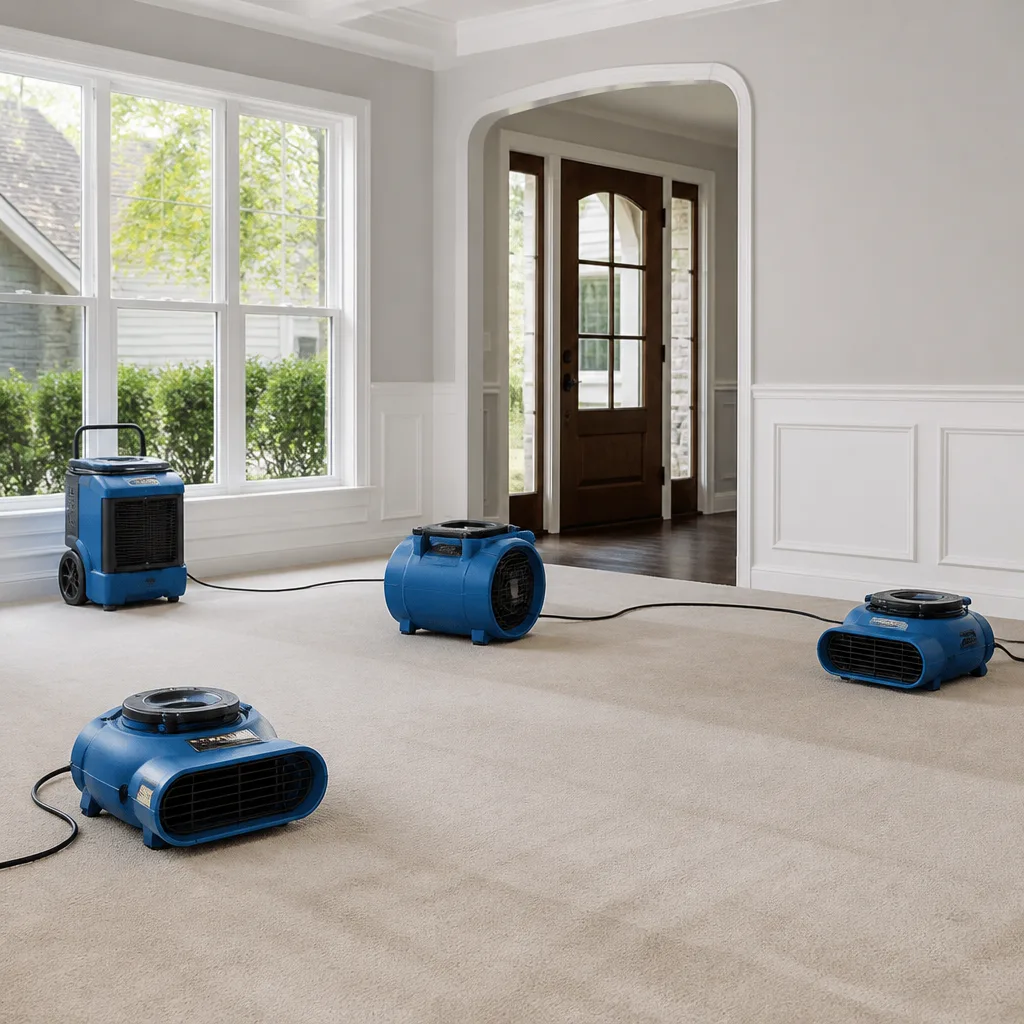
We run Dri-Eaz dehumidifiers, Phoenix axial air movers, and Injectidry drying mats on every Plainedge extraction job. These aren’t rental-shop blowers. They’re the same professional-grade units used on large commercial loss sites, and they let us meet IICRC and RIA drying standards, which means we’re accountable to a written drying log, not a guess about whether your floors are dry.
Trusted Brands We Service in Plainedge
Most Plainedge homes were built before modern building codes required moisture barriers under slabs, so the equipment matters more than the brand on the truck. We run Dri-Eaz and Phoenix professional-grade drying equipment on every job, and our techs are trained to IICRC, RIA, and IFA standards, not manufacturer shortcuts. When you have a Phoenix axial air mover or an Injectidry mat running in your living room, you know the air is being moved and filtered the right way. We keep replacement parts and drying consumables stocked for Plainedge jobs so we’re not waiting on a distributor when your floors are wet.
See the difference
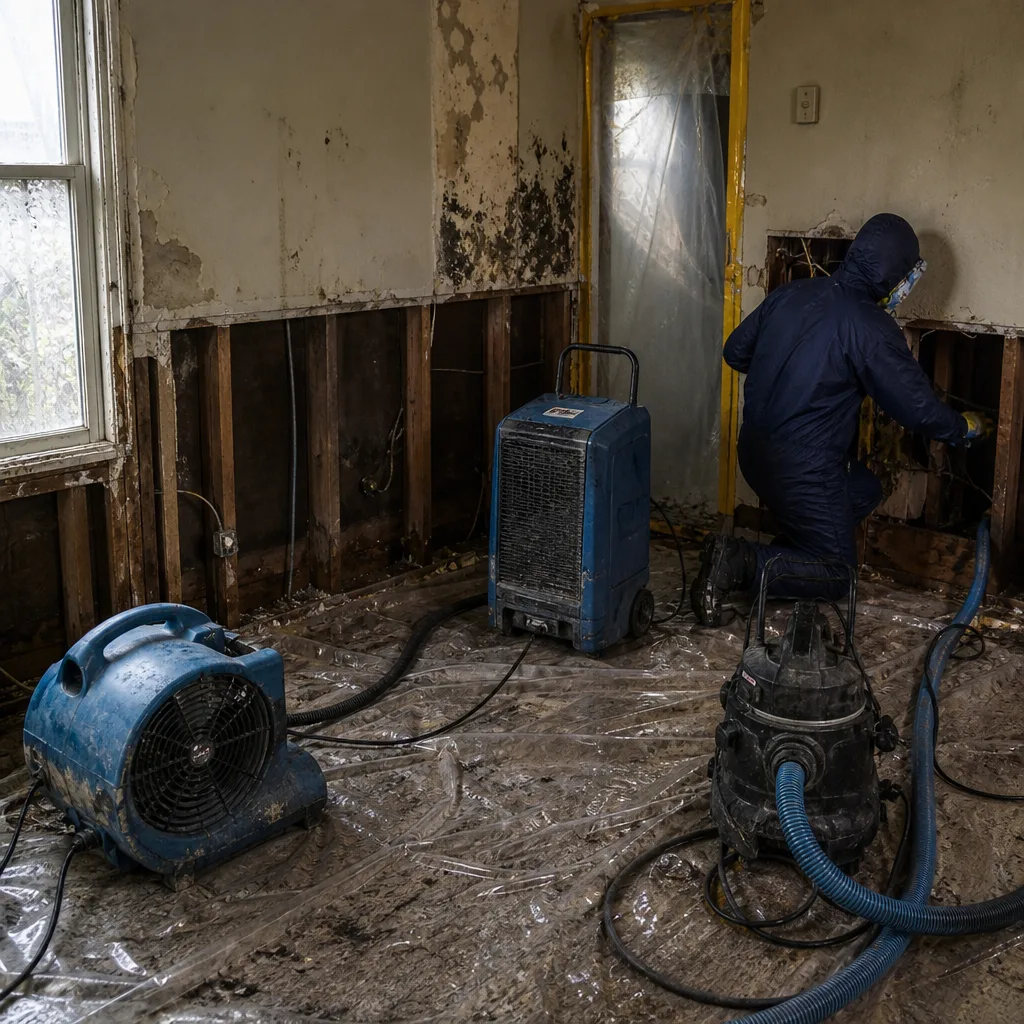 Before
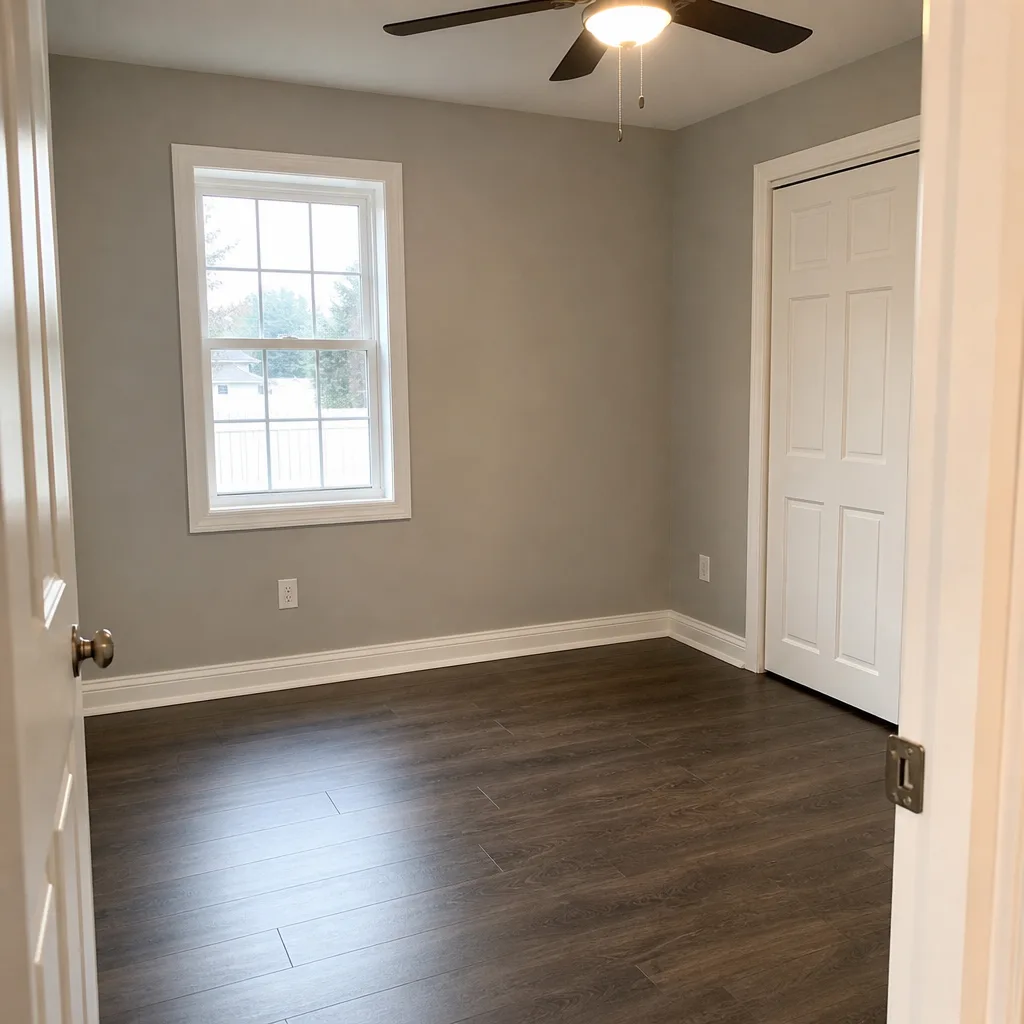 After
After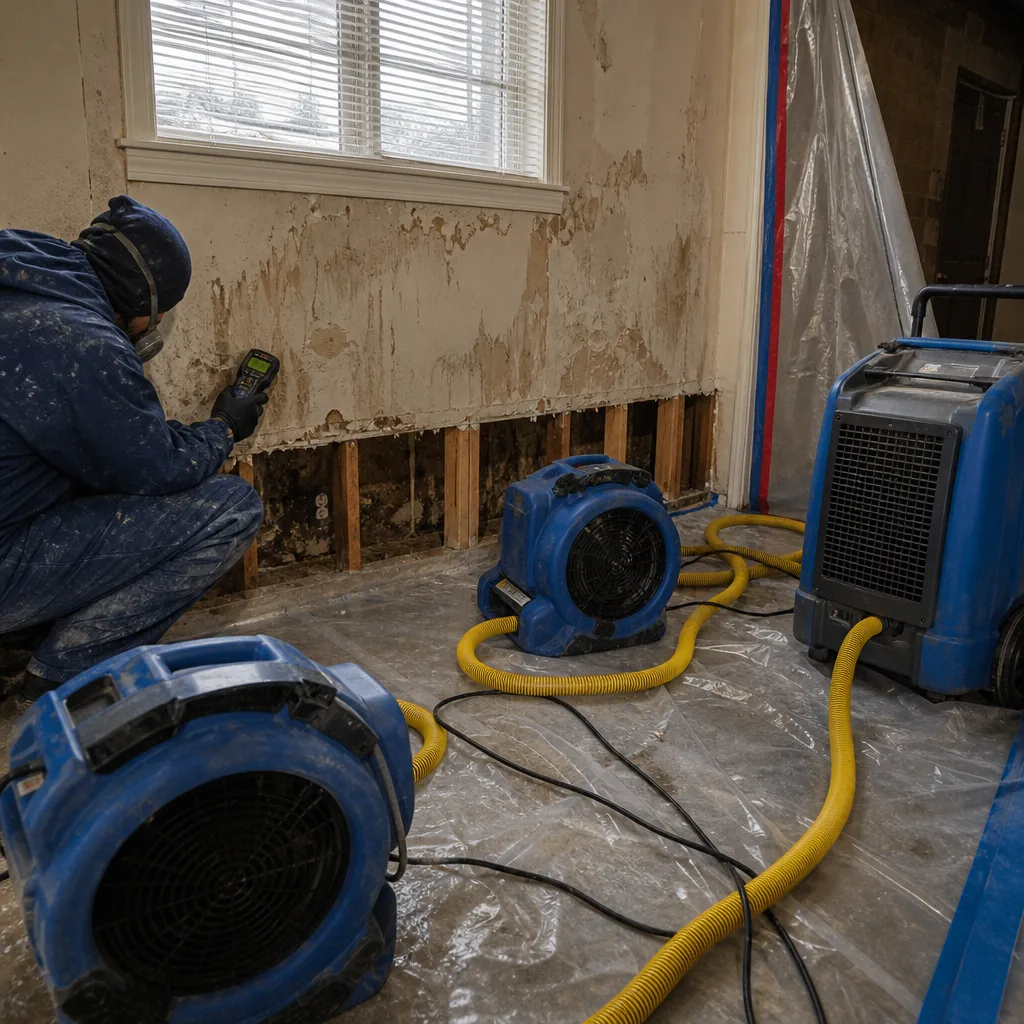 Before
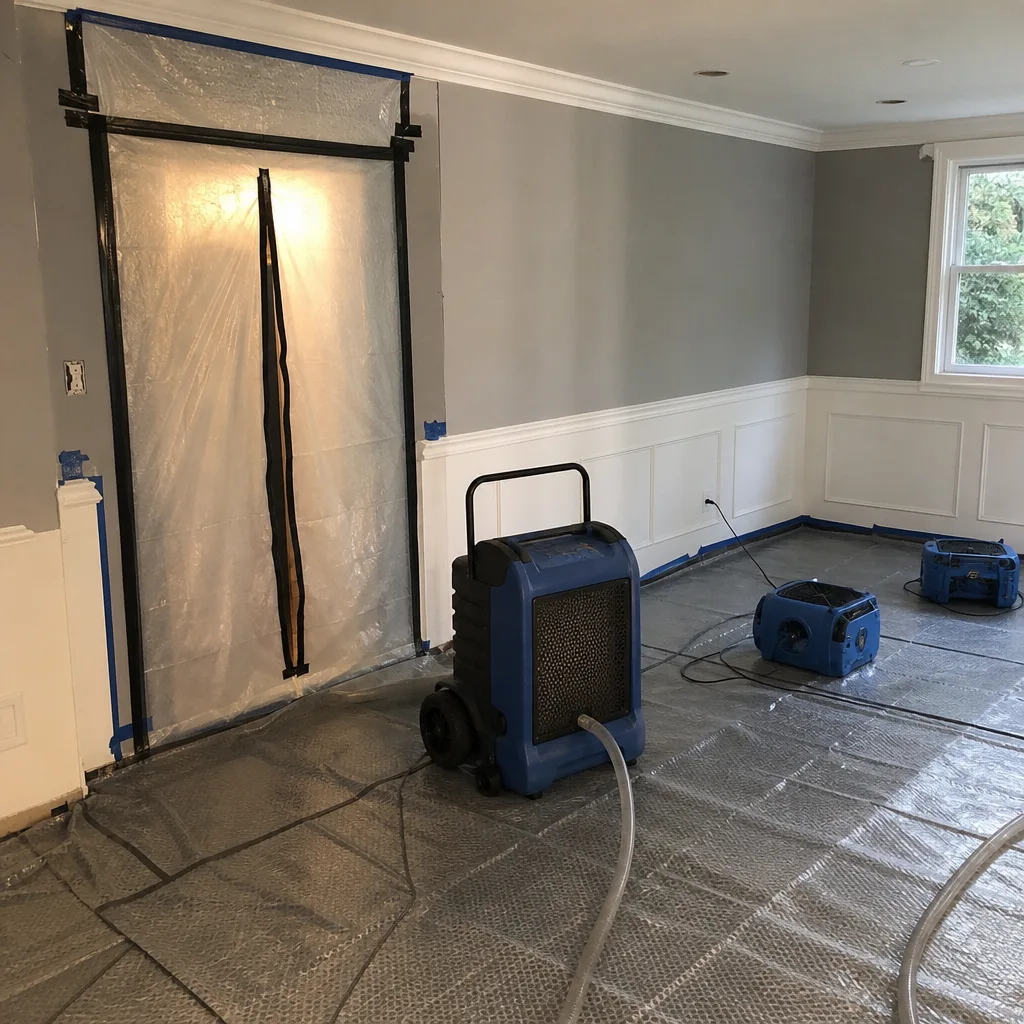 After
After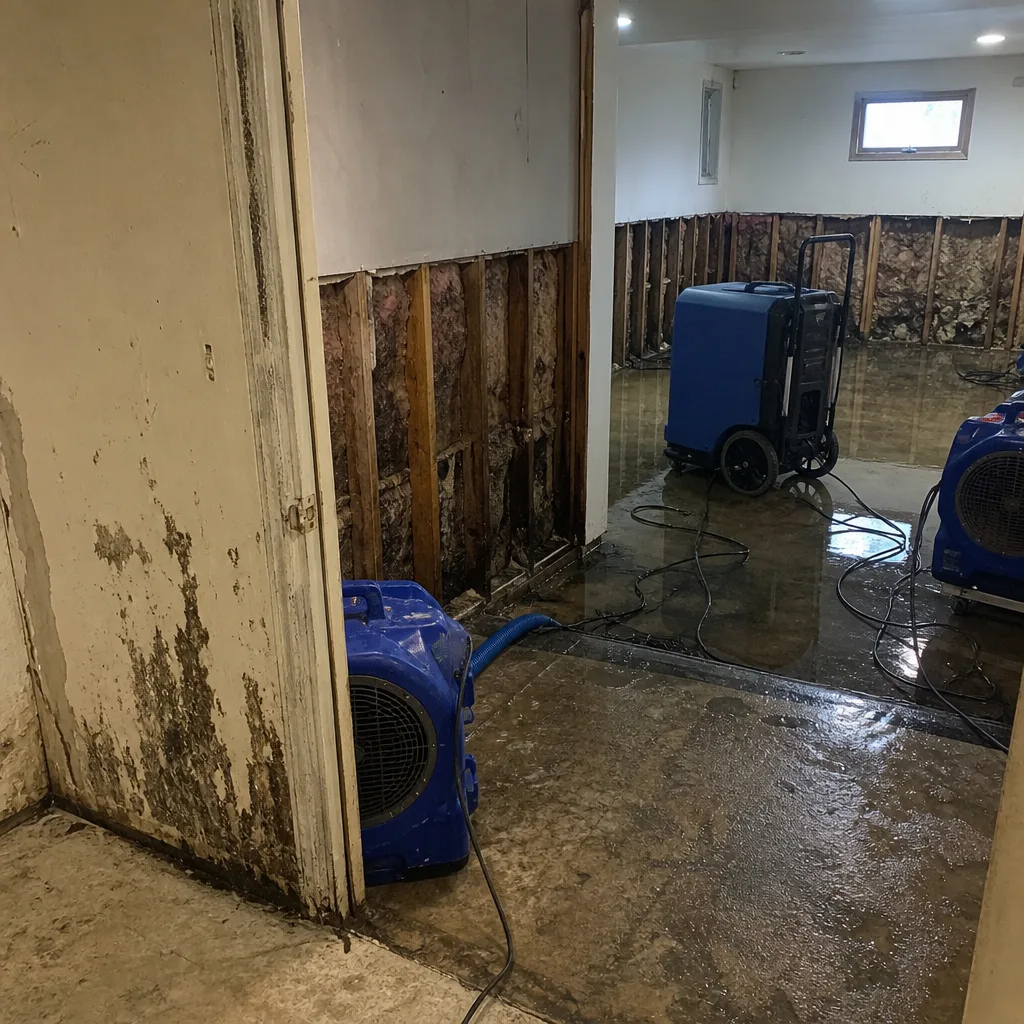 Before
 After
AfterCommon Water Damage Restoration Problems We See in Plainedge Homes
- Groundwater rising through slab cracks on the north side. Plainedge sits on a coastal plain with a high water table, and after a nor’easter, water comes up through the slab before any pipe fails. We check baseboard moisture first because it tells us whether the water came from below or from a failed supply line.
- End-of-life cast-iron supply lines under 1950s slabs. These pipes are 60 to 70 years old now, and once they start leaking, the water travels under the slab and surfaces in a completely different room. A slab leak often looks like groundwater, so we run thermal imaging and moisture mapping to tell the two apart.
- Ice dams at dormer intersections on renovated Capes. Plainedge has a lot of Capes with dormers added in the 1980s and 1990s. The roof pitch changes at the dormer, snow melts and refreezes, and water backs up under the shingles into the wall cavity. By the time you see the ceiling stain, the water may have been sitting there for weeks.
- Freeze-thaw bursts in uninsulated split-level crawl spaces. Each winter, we get calls for split-levels where the supply line in the crawl space froze and burst. The water pools under the floor joists, soaks the subfloor, and wicks into the wall cavity behind original paneling before anyone notices.
Pricing for Water Damage Restoration in Plainedge, NY
We Also Serve Cities Near Plainedge
Our crews serve Plainedge and the surrounding Nassau County communities, including Hempstead, Jamaica, Massapequa, and Baldwin. If you’re outside those areas but nearby, call us and we’ll let you know if we can reach you. For a full look at how we work across the region, see our Water Damage Restoration in Plainedge page.
Serving Plainedge, NY - Our Local Coverage Area
We’re based in the Plainedge area and know this community well. Use the map below to see our service coverage - if you’re nearby, we can almost certainly help.
FAQs About Water Damage Restoration in Plainedge
How do I know if water in my Plainedge slab home is from a pipe leak or groundwater rise after a nor’easter?
A pipe leak usually shows up as a warm spot on the floor and a continuous, small stream of water, while groundwater rises and falls with the water table and feels cold. The reliable way to tell is to check baseboard moisture: groundwater wicks up through the slab and into the baseboards first, while a pipe leak pools under the slab and surfaces in one room. We can run thermal imaging to confirm before any wall is opened. Call (516) 559-6972 and we’ll walk you through it.
Why does my 1960s split-level in Plainedge keep getting water in the crawl space every winter?
Freeze-thaw cycles are the culprit. Plainedge split-levels often have uninsulated crawl spaces where supply lines run close to the foundation. In winter, those pipes freeze and burst, then thaw and leak. The water pools under the floor joists and wicks into the wall cavity. The fix is extraction plus targeted drying, but the long-term solution is insulating or rerouting those lines. We’ll explain the difference in your written scope.
What category of water does a slab leak from a cast-iron pipe fall under, and can you dry it in place?
A slab leak from a cast-iron supply line is category 1 water if it’s from a clean water source, but once it sits under a slab for more than 48 hours it degrades to category 2 or 3. We can dry it in place in many cases using Injectidry mats and air movers, but only if the pipe is repaired first and the water hasn’t saturated original hardwood beyond salvage. We’ll tell you whether drying in place is possible or whether pack-out and replacement is needed before any cutting starts.
How soon should I call after a water event in my Plainedge Cape Cod with oak floors?
Call immediately. Oak floors absorb water fast, and in Plainedge’s humid coastal climate, mold can start in as little as 48 hours. The sooner we start extraction and drying, the better your chance of saving the original floors. We answer live 24/7 at (516) 559-6972, and we’ll give you a written price before any work starts.
Will your water extraction process be enough, or will I need pack-out and replacement of my original 1950s materials?
Extraction alone is rarely enough for a slab leak or groundwater intrusion. You need structural drying and antimicrobial treatment to get the slab and wall cavities fully dry. Whether original materials can be saved depends on how long they were wet and what they’re made of. Original hardwood from the 1950s can often be saved with Injectidry mats if we get there fast, but saturated paneling or gypsum board usually needs replacement. We’ll put that assessment in writing before we touch anything.
Written by Blake Sorensen, Owner at Wendell Restoration Hempstead, serving Plainedge since 2006.