
Last updated October 16, 2026
 Water damage drying
 Fire & smoke cleanup
 Mold remediation
 Storm response
 Sewage cleanup
 Reconstruction
Free visual inspection and a written scope of work before any mitigation begins - photos, moisture readings, and drying logs go in your claim file
The scope we write is the scope we bill. Anything new gets shown to you, in writing, before we touch it.
Get your free estimateThe Complete Guide to Damage Restoration in Hempstead
Most homeowners in Hempstead discover the hard way that “damage restoration” is not one service but a four-part sequence: water extraction, structural drying, mold prevention, and rebuild. A company arrives, pulls out the water, sets up fans, and leaves three days later calling the job done. Six weeks after that, the homeowner smells something musty behind the baseboard. In Hempstead, where summers run humid and fall brings nor’easter rains, that six-week gap is exactly how long mold needs to take hold in a wall cavity that was never actually dried to standard. This guide and our more guides & resources explain the full sequence, the standards that govern each phase, what documentation you should demand, and the pricing model that separates a legitimate restoration crew from a company that hands you a vague invoice at the end. By the time you finish reading, you’ll know more about the restoration process than most contractors expect any homeowner to know.
Restoration work we handle
Quick Answer
Damage restoration in Hempstead is a four-phase process: water mitigation, structural drying, mold remediation, and repair or rebuild. Done correctly, it takes anywhere from three days for a small clean-water leak to six weeks for a full reconstruction job. Any contractor you hire should put the price in writing before work starts, document moisture readings at every phase, and hold themselves to IICRC standards for drying and water restoration. For a detailed look at what drives costs locally, see our Damage Restoration Cost Breakdown: The Hempstead Homeowner’s Reference for 2026.
Table of Contents
- Phase One: Water Mitigation and Extraction
- Phase Two: Structural Drying and the Numbers That Matter
- What IICRC S500 and S520 Standards Actually Require
- Phase Three: Mold Prevention and Remediation
- Phase Four: Repair and Rebuild
- Who Does the Work: Subcontractors and How to Vet Them
- What Damage Restoration Costs in Hempstead
- Common Mistakes to Avoid
- When to Call a Professional
- Frequently Asked Questions
- The Bottom Line
Phase One: Water Mitigation and Extraction
The first hour after a pipe bursts or a water heater fails is the most consequential hour in the whole restoration sequence. Water is already moving through drywall, wicking up into baseboards, and seeping into subfloor layers. Our crews in Hempstead routinely arrive to find that a leak that started at 2 a.m. has traveled fifteen feet from the source by 9 a.m. That’s not an exaggeration; water follows gravity and capillary action, which means it moves sideways through porous materials faster than most people assume.
Mitigation is the emergency response. It includes stopping the source, extracting standing water, removing saturated materials that cannot be saved, and setting up the first stage of drying. A proper extraction uses a truck-mounted or portable extraction unit rated for the square footage of the affected area. The goal is not just to remove what you can see. The goal is to remove enough water that the drying equipment can do its job in days, not weeks.
What homeowners in Hempstead should expect during this phase:
- Water source stop: A plumber or the restoration crew shuts off the supply, whether that means closing a valve, capping a line, or shutting the main.
- Standing water extraction: Submersible pumps for deep water, extraction wands for carpet and hard surfaces.
- Material triage: Some materials get cut out immediately: saturated carpet padding, wet insulation, waterlogged drywall. Other materials, like solid wood framing, often stay and get dried in place.
- Initial antimicrobial application: In Hempstead’s summer humidity, this is non-negotiable. An untreated wet wall cavity will start growing mold within 48 to 72 hours.
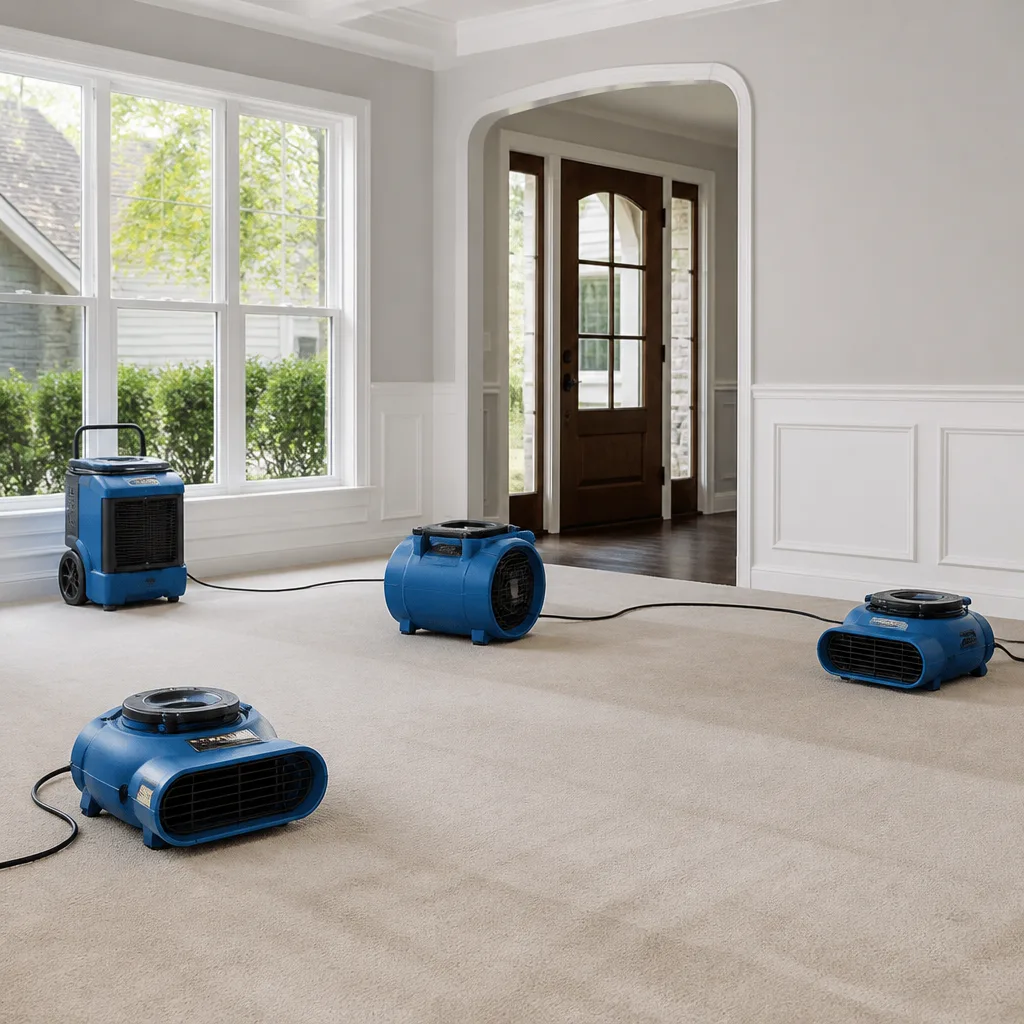
- Drying equipment deployment: Commercial air movers and dehumidifiers go in before the crew leaves.
In our experience, this phase takes anywhere from a few hours to a full day depending on the size of the loss. A burst washing machine supply line in a small bathroom is usually handled by early afternoon. A sewer backup through a finished basement in Hempstead can take two days just to extract and remove saturated materials. The key point: mitigation is not the end of the job. It’s the beginning.
Phase Two: Structural Drying and the Numbers That Matter
A restoration company that leaves after “drying out” the walls has finished roughly forty percent of the actual job. The rest happens in the invisible space inside wall cavities, under subfloors, and behind baseboards. This is where structural drying comes in, and where the term psychrometric drying becomes relevant.
Psychrometry is the science of measuring air moisture content. A competent drying technician tracks the moisture in the air (relative humidity, dew point, grains per pound) and the moisture in materials (wood moisture equivalent, or WME) using specialized meters. The goal is not to make surfaces feel dry to the hand. The goal is to hit specific, measurable drying targets that confirm a material is dry enough to prevent mold growth and structural damage.
Here’s what we track on every Hempstead job:
- Indoor relative humidity: During active drying, the target is generally below 50 percent. In Long Island summer conditions, this often requires a low-grain refrigerant dehumidifier running continuously for several days.
- Wood moisture content: Framing lumber and subfloor should return to its dry standard, typically 8 to 12 percent in this region. A reading above 16 percent means the wood is still wicking water from somewhere.
- Drywall moisture content: Drywall that reads above 1 percent on a moisture meter is suspect. Wet drywall loses structural strength quickly and becomes a breeding ground for mold.
- Concrete slab readings: Hempstead basements are mostly concrete slab. Concrete can release water vapor for weeks after a flood, which is why slab moisture must be tracked before any flooring goes back down.
Drying to standard takes three to five days for a typical residential water loss, sometimes longer when the framing is old growth wood that absorbed water like a sponge. The technician should document readings at every visit and give you those numbers. A company that won’t show you moisture readings is a company that doesn’t want you to know if they’re actually drying your home or just running fans until the invoice is due.
What IICRC S500 and S520 Standards Actually Require
The Institute of Inspection, Cleaning and Restoration Certification publishes standards that define what proper restoration looks like. The two most important for water and mold are the S500 Standard for Professional Water Damage Restoration and the S520 Standard for Professional Mold Remediation. Most homeowners in Hempstead never hear about these standards, and many restoration contractors count on that ignorance.
The S500 standard requires contractors to document three things at minimum: the category of water (clean, gray, or black), the class of water damage (which measures the amount of water and the evaporation load), and the drying goals for the affected materials. A contractor following S500 should be able to hand you a moisture map: a floor plan showing where moisture readings were taken, what the initial readings were, and what the current readings are. If they can’t produce that document, they’re not following the standard, no matter what their website says.
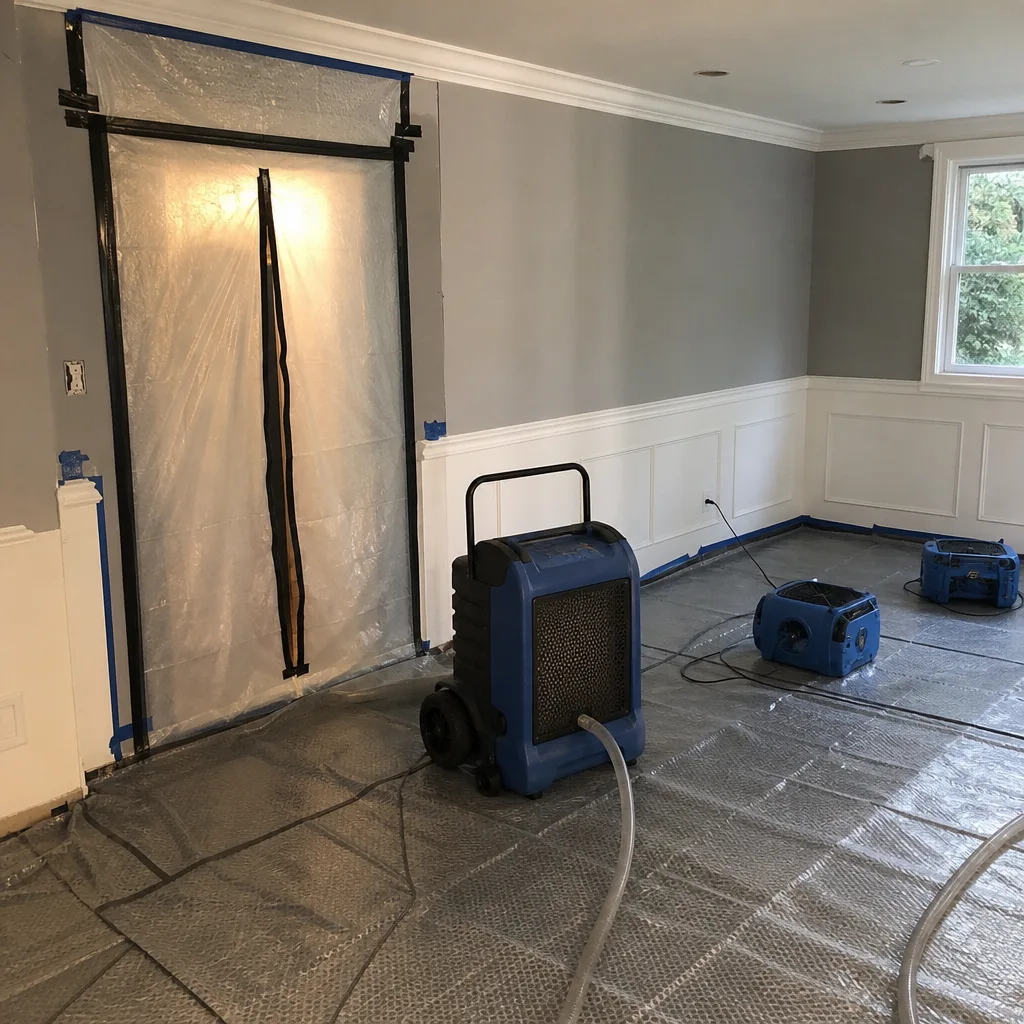
The S520 standard applies to mold remediation. It requires containment of the affected area before any mold-disturbing activity begins, negative air pressure to prevent cross-contamination, and source removal of mold growth rather than simply killing it with chemicals. “Killing” mold is not enough because dead mold spores still trigger allergic reactions and asthma symptoms. The S520 approach is to remove the mold at the source, clean the remaining surfaces, and then verify with post-remediation sampling that the indoor spore counts match the outdoor baseline.
Here is the documentation trail a proper restoration job should generate at each phase:
- Initial assessment: Scope of the damage, classification of water, moisture map with baseline readings.
- During drying: Daily moisture log showing the progression of readings, equipment inventory, and any adjustments made to the drying plan.
- At drying completion: Final moisture readings that show all affected materials have reached their dry standard.
- At mold remediation completion: Post-remediation verification report, ideally from a third-party environmental consultant, confirming spore counts are within normal range.
- At rebuild completion: Photos, a final walkthrough checklist, and a written warranty on the work.
When you hire a restoration company in Hempstead, ask about S500 and S520 by name. The reaction you get is revealing. A trained restoration professional will talk about readings and documentation. A company that hand-waves those questions was planning to dry by feel and clean by sight.
Phase Three: Mold Prevention and Remediation
Mold prevention and mold remediation are different things, but in a water damage sequence they’re connected. Prevention happens in the first 48 hours: removing water fast, drying materials to standard, and applying antimicrobial treatment to surfaces that got wet. This is not a substitute for mold remediation; it’s a defense against needing mold remediation later.
Remediation becomes necessary when mold has already taken hold. Maybe the leak was hidden inside a wall for weeks. Maybe a previous mitigation was not dried to standard. Maybe the Hempstead summer humidity never let the framing fully dry. Whatever the cause, visible mold growth or a persistent musty smell means the S520 protocol applies: containment, source removal, cleaning, and verification. If you’re unsure whether your home shows early warning signs, review our Damage Restoration Warning Signs: A Hempstead Homeowner’s Reference Guide.
In Hempstead, we see two common paths. The first is the direct path: a water damage event happens, the homeowner calls a company that handles mold prevention correctly during the drying phase, and mold never develops. The second path is the one that fills our call log in July and August: a homeowner had a leak three months earlier, the previous company “dried things out,” and now patchy black or gray growth is appearing on the baseboard and the smell won’t go away. That homeowner is now paying for mold remediation on top of the original water damage restoration, which should never have happened if the first company had dried to standard.
Mold remediation costs in Hempstead typically range from $1,500 to $6,000 for small to medium affected areas. Full-scale remediation with containment, negative air machines, and HEPA filtration can run higher. If you’re hiring someone for this work, ask if the post-remediation verification will be performed by the same company or a third party. A company that verifies its own work has an incentive to pass itself. A third-party verification costs more but removes that conflict of interest.
Phase Four: Repair and Rebuild
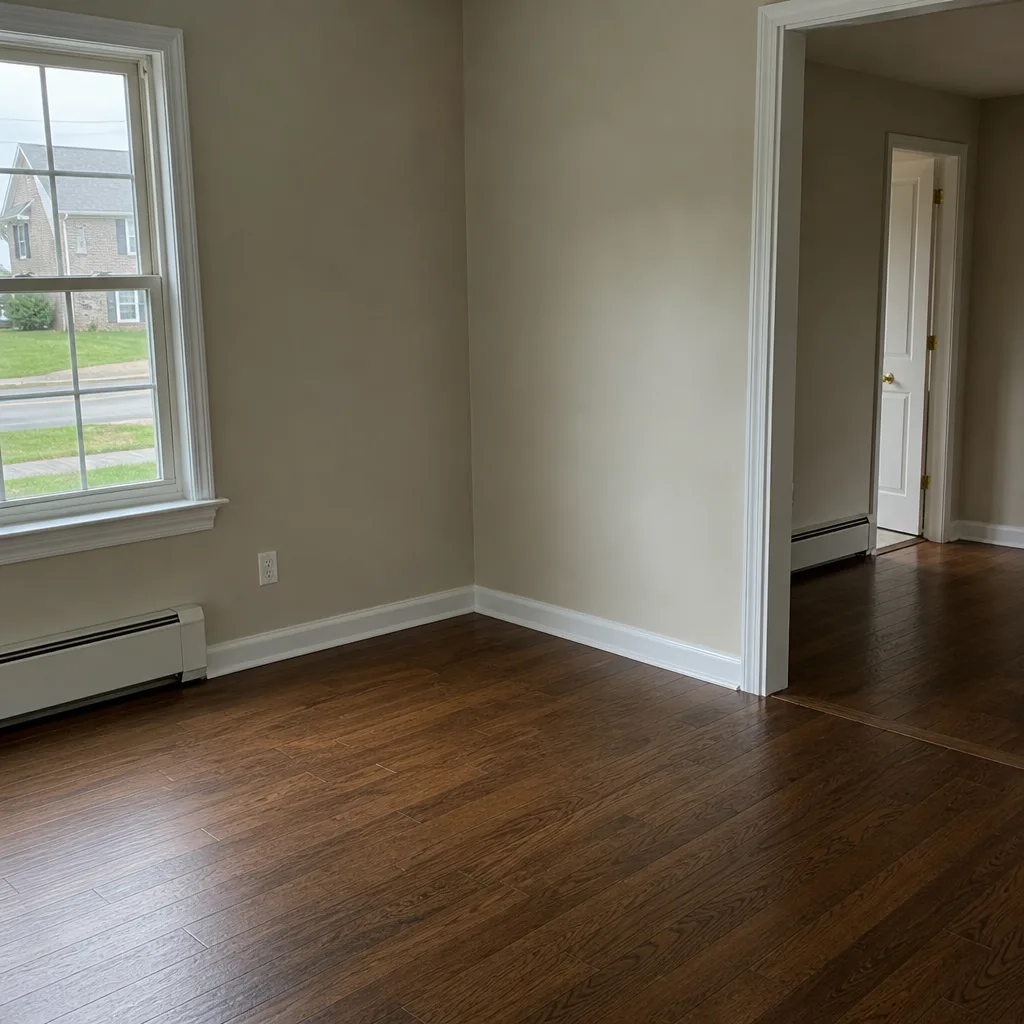
The final phase is the one most people think of first: putting the home back together. Drywall replacement, insulation installation, flooring, painting, trim work, and sometimes cabinet or fixture replacement. This is reconstruction, and it’s paced like a remodel because that’s what it is.
Rebuild work is where the scope and the written price matter most. A restoration company that gave you a vague “we’ll see what it costs when we get in there” quote has just handed you an open checkbook. The right approach is a written scope of work: line items for every task, materials included, numbers next to each line, and a total at the bottom. That document is your contract. If the company finds additional hidden damage during rebuild, you approve a written change order before that work starts, not after the invoice arrives.
Timeline for a typical rebuild phase in Hempstead:
- Small repairs (drywall patch, one room, repaint): 3 to 5 days once drying is verified complete.
- Medium repairs (multiple rooms, flooring replacement, trim): 1 to 2 weeks.
- Full room rebuilds (kitchen or bathroom gut, cabinet replacement, tile work): 2 to 4 weeks.
- Whole-floor reconstruction: 4 to 6 weeks or longer, depending on availability of trades.
One important note for Hempstead homeowners: reconstruction should never start until the drying verification is in hand. If a contractor wants to hang drywall over framing that reads 18 percent moisture, they’re sealing moisture inside the wall. That is a guaranteed callback for mold, and you’ll be paying for it twice.
Who Does the Work: Subcontractors and How to Vet Them
Restoration companies in Hempstead generally perform the mitigation, drying, and mold remediation work with their own employees. The rebuild phase often involves subcontractors: electricians, plumbers, painters, flooring installers, and finish carpenters. This is normal and not a red flag. The red flag is when a company cannot tell you who those subcontractors are, whether they’re licensed, and whether they carry their own insurance.
In New York, electricians and plumbers must hold state and local licenses. For a full overview of regulatory requirements, see Damage Restoration Permits, Codes & Inspections in NY: What You Need to Know. The Town of Hempstead Building Department requires permits for most electrical and plumbing work. A legitimate restoration company will either pull those permits itself or coordinate with the subcontractor who does. If the answer to “who’s pulling the permit?” is a shrug, walk away.
Here’s the vetting checklist we recommend to any Hempstead homeowner:
- Ask for the name and license number of every subcontractor who will enter your home. Verify electricians and plumbers with the local building department.
- Confirm insurance coverage. The restoration company should carry general liability and workers’ compensation. Subcontractors should carry their own policies. Ask for certificates of insurance.
- Ask who supervises the work. A good restoration company assigns a project lead who is on site daily during rebuild and reachable by phone.
- Get the payment schedule in writing. Never pay the full amount upfront. Standard practice is a deposit, progress payments tied to milestones, and a final payment after the walkthrough.
- Require lien waivers. A lien waiver from each subcontractor confirms they were paid for their portion of the work and won’t file a claim against your property later.
Most of the nightmare stories we hear start the same way: the homeowner never asked these questions, the subcontractor never got paid by the general, and six months later a mechanics lien shows up on the property. That’s a failure of process, not a surprise.
What Damage Restoration Costs in Hempstead
Hempstead sits in a higher-cost region for restoration work, driven by labor rates and the cost of commercial drying equipment. Here are the ranges we see for typical residential jobs, using Hempstead market conditions:
| Service | Typical Range | Notes |
|---|---|---|
| Water extraction and mitigation (small, clean-water) | $800 – $1,800 | Bathroom leak, washer overflow, one room affected |
| Structural drying (3-5 days with monitoring) | $1,200 – $2,500 | Includes equipment, daily visits, moisture documentation |
| Mold remediation (small to medium, contained area) | $1,500 – $6,000 | Containment, source removal, HEPA cleaning |
| Water damage repair (drywall, trim, paint) | $1,500 – $5,000 | Depends on materials and room count |
| Full basement flood restoration (clean water) | $6,000 – $15,000+ | Extraction through rebuild |
| Sewage backup remediation (black water) | $5,000 – $20,000+ | Removal of contaminated materials, full sanitation |
These are not quotes. They’re the ranges we’ve observed and, in our experience, the numbers a homeowner should expect when calling around Hempstead. The final price depends on square footage affected, materials involved, the water category, and how quickly the work starts.
Common Mistakes to Avoid
- Signing a work order before the company gives you a written estimate. A work order is a contract. An estimate is a number. If you sign the work order without a written estimate attached, you’ve agreed to unknown costs. In Hempstead, reputable restoration companies put the price in writing before any tools come out.
- Accepting a vague “we’ll dry it out” promise with no moisture readings. Drying is a measurable process. No readings, no documentation, no accountability. Ask for the daily moisture log.
- Waiting a few days to see if the water “dries on its own.” In Hempstead’s climate, that wait is exactly how mold gets established. The 48-hour window is real.
- Hiring a contractor that says they don’t need to open the wall to check the cavity. If water entered the wall, the cavity must be inspected. Full stop. Any company that says they can dry it from the outside is gambling with your home.
- Paying the full amount before the final walkthrough and documentation. A small deposit is standard. Progress payments tied to milestones are standard. Full payment upfront is a red flag.
- Ignoring the insurance claim process until after the work is done. Many Hempstead homeowners have water damage coverage. Document everything with photos, report the loss promptly, and ask whether your contractor works directly with adjusters.
- Assuming the restoration company will handle permits for all rebuild work. Some do, some don’t. Ask explicitly. Unpermitted electrical or plumbing work becomes a problem when you sell the home.
When to Call a Professional
Any water event that reaches more than one room, involves black water or sewage, or is the result of a storm entering through the roof or foundation is not a DIY situation. Same for any visible mold growth larger than a small patch, or a persistent musty smell you can’t locate. Small clean-water spills under a few square feet are manageable with towels, fans, and patience. Everything else deserves a professional. Wendell Restoration Hempstead offers free estimates in Hempstead and writes the price before work starts. Call (516) 559-6972 for an assessment.
Frequently Asked Questions
Most residential water damage restoration in Hempstead takes between one week and six weeks depending on scope. A small clean-water leak can finish mitigation and drying in 3 to 5 days with rebuild adding a few more days. A flooded basement with sewage contamination and full rebuild work can take four to six weeks.
Most Hempstead homeowner policies cover sudden and accidental water damage from burst pipes, appliance failures, and storm water entering through wind-damaged openings. Damage from long-term leaks, neglect, or gradual seepage is typically excluded. Document everything with photos before cleanup begins, keep receipts, and ask your restoration company if they handle adjuster coordination.
A company that answers its phones live can often have a technician to your Hempstead home within a few hours during business hours and same-day for emergencies. The critical window is the first 48 hours; every hour before extraction and drying begins increases the chance of mold. Our phone line at (516) 559-6972 is answered by a person around the clock.
Household fans move surface air but do not draw moisture out of wall cavities, subfloors, or framing lumber. Structural drying requires commercial equipment and moisture monitoring to hit the numerical standards that prevent mold and structural decay. A fan makes the room feel dry while leaving the remaining areas wet.
A written scope of work protects you from price escalation after the job begins. It lists every task, the materials, and the cost line by line. If additional damage is found, the company must bring you a written change order. Without a scope, the final invoice is whatever the company says it is. Call (516) 559-6972 and ask about our no-hassle upfront pricing.
Hempstead’s coastal humidity makes drying slower and mold risk higher than in drier inland climates. Older housing stock, common in parts of Hempstead, often means plaster walls, settled framing, and materials that hold water differently than modern construction. Both factors make professional moisture monitoring more important here, and they make choosing a company that documents its drying work essential.
The Bottom Line
Damage restoration in Hempstead is a sequence with four distinct phases, and each one has standards, documentation, and a price tag. The companies worth hiring are the ones that explain that sequence, document their readings, and put their scope in writing before work starts. The ones worth avoiding are the ones that promise a one-visit fix and leave before the walls are actually dry. When you’re standing in a flooded basement at 3 a.m. or staring at mold on a baseboard in August, the decision you make in that moment determines whether you deal with this problem once or twice. Our advice: call a company that writes the price before it touches a tool, shows you the moisture readings, and backs the repair in writing.
Written by Blake Sorensen, Owner at Wendell Restoration Hempstead, serving Hempstead since 2006.
See the difference
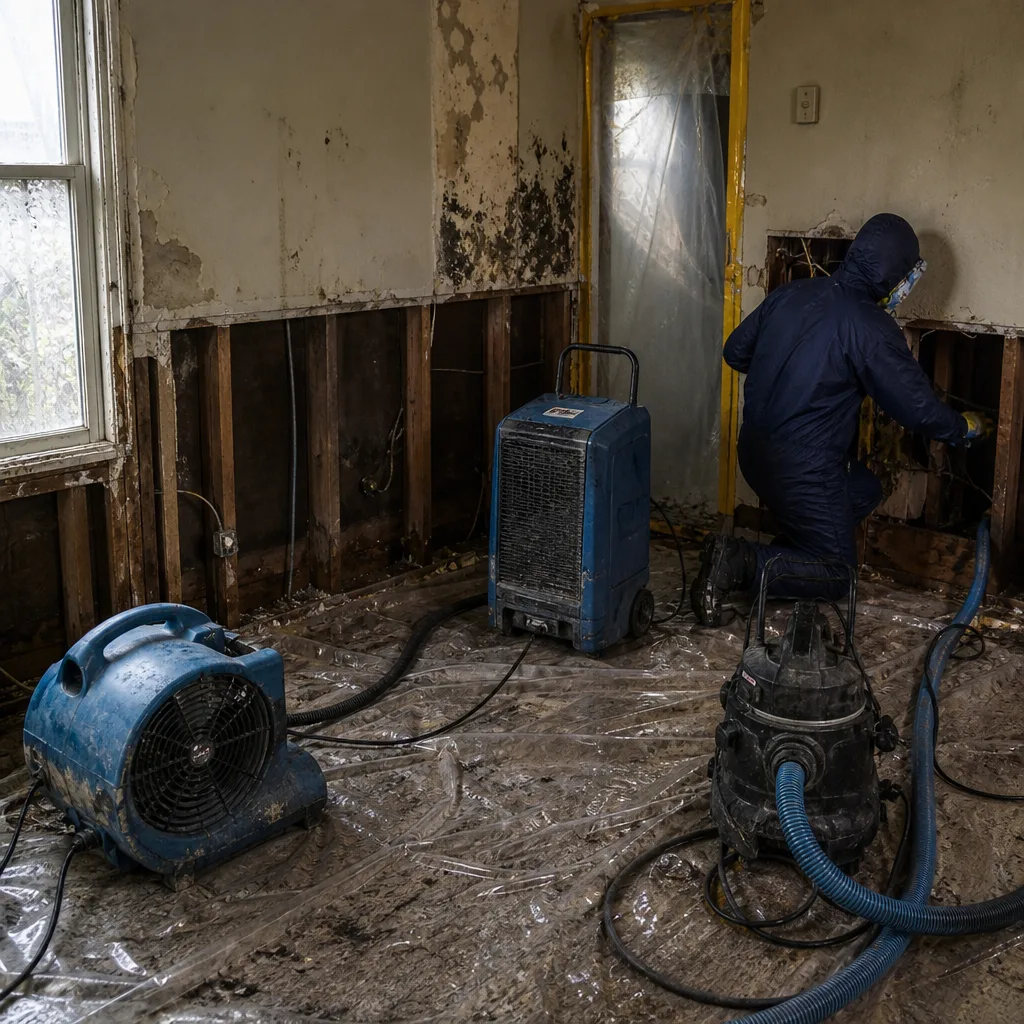 Before
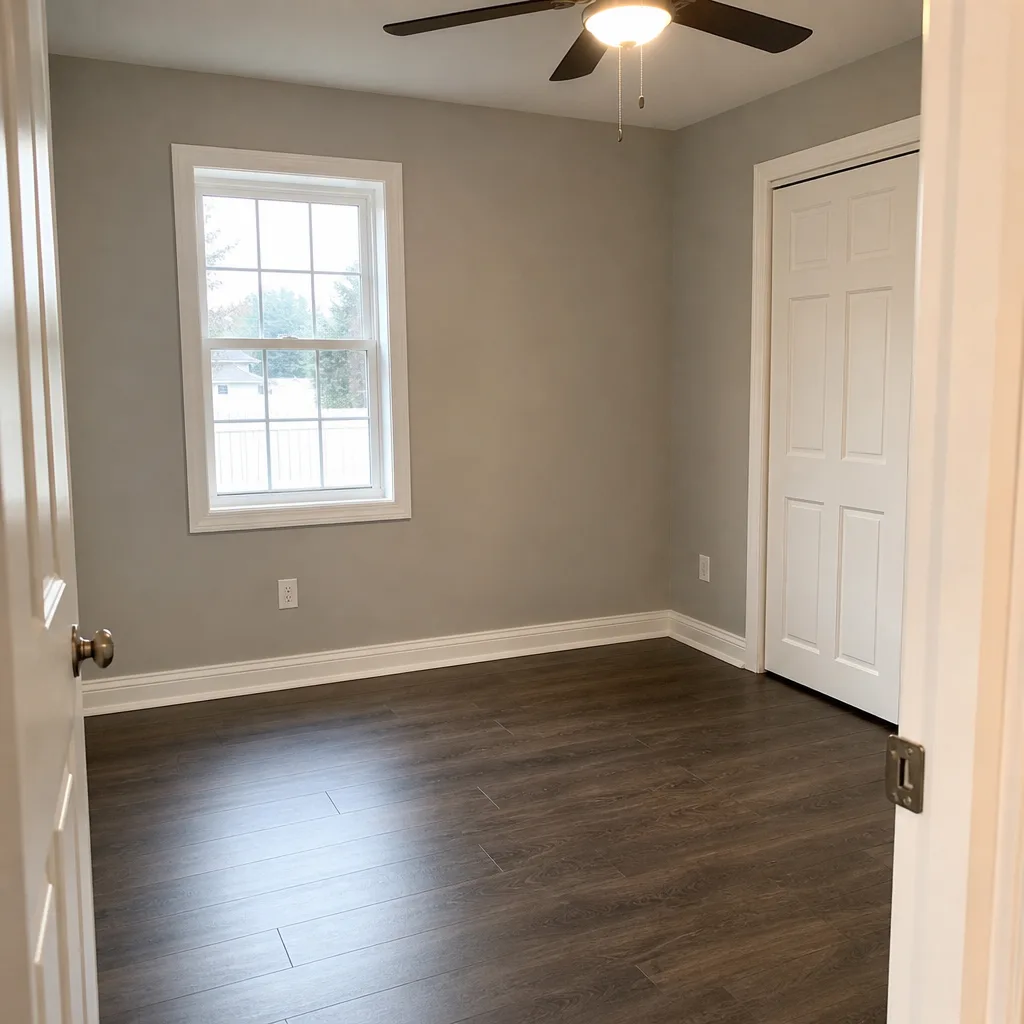 After
After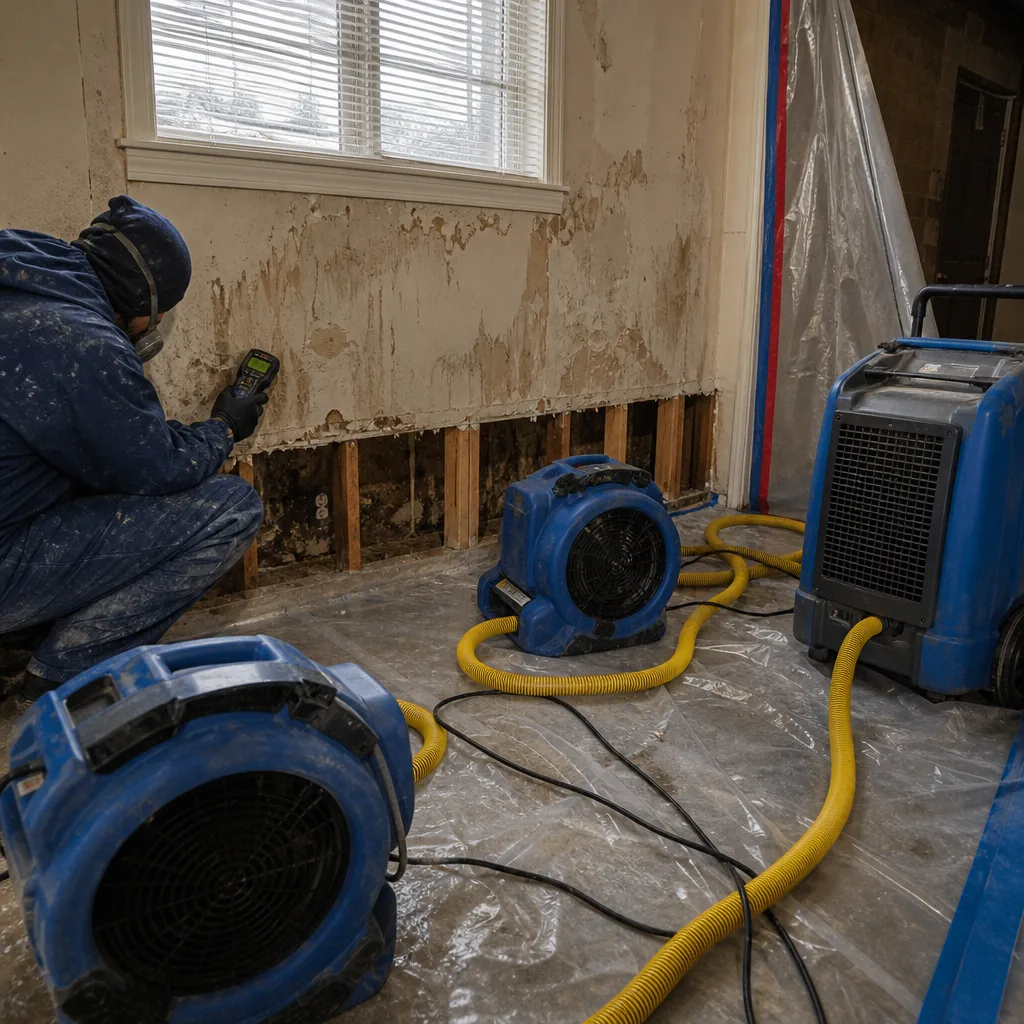 Before
 After
After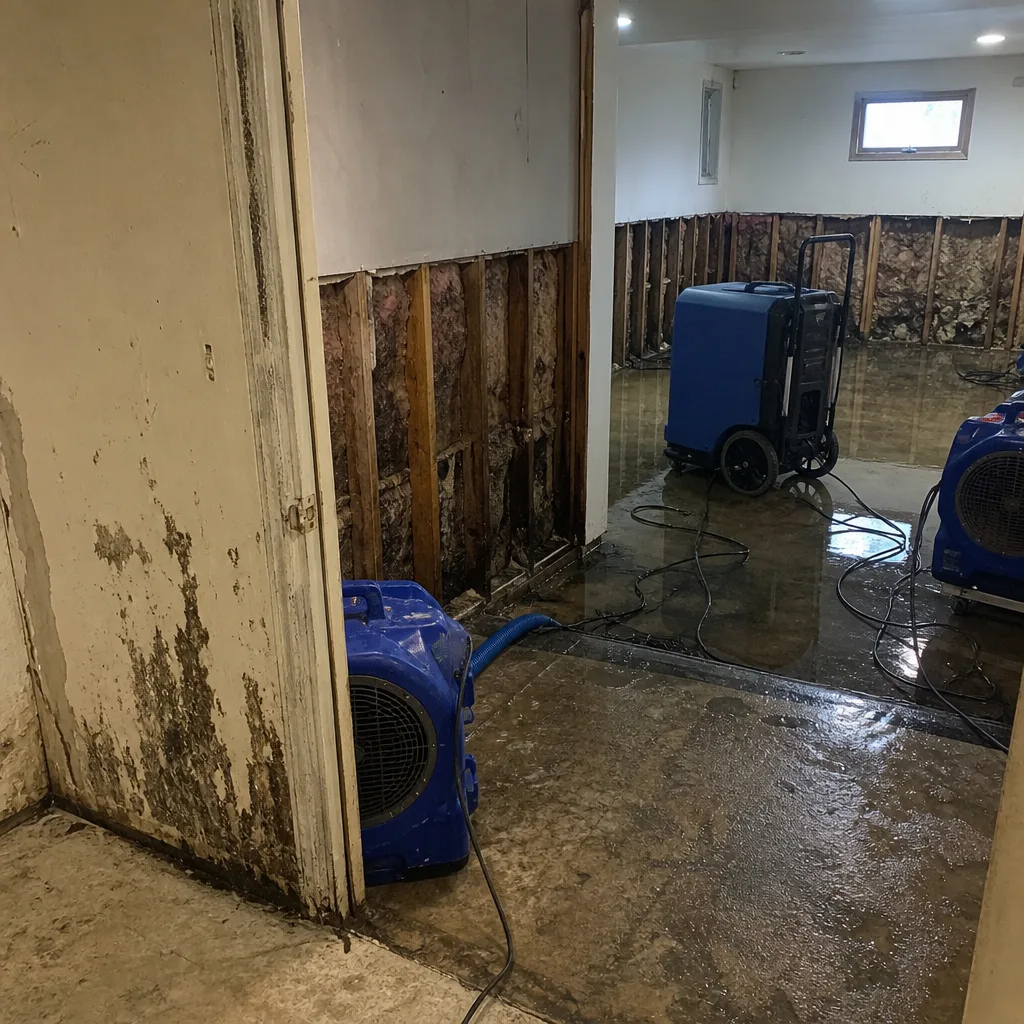 Before
 After
After