
Last updated October 16, 2026
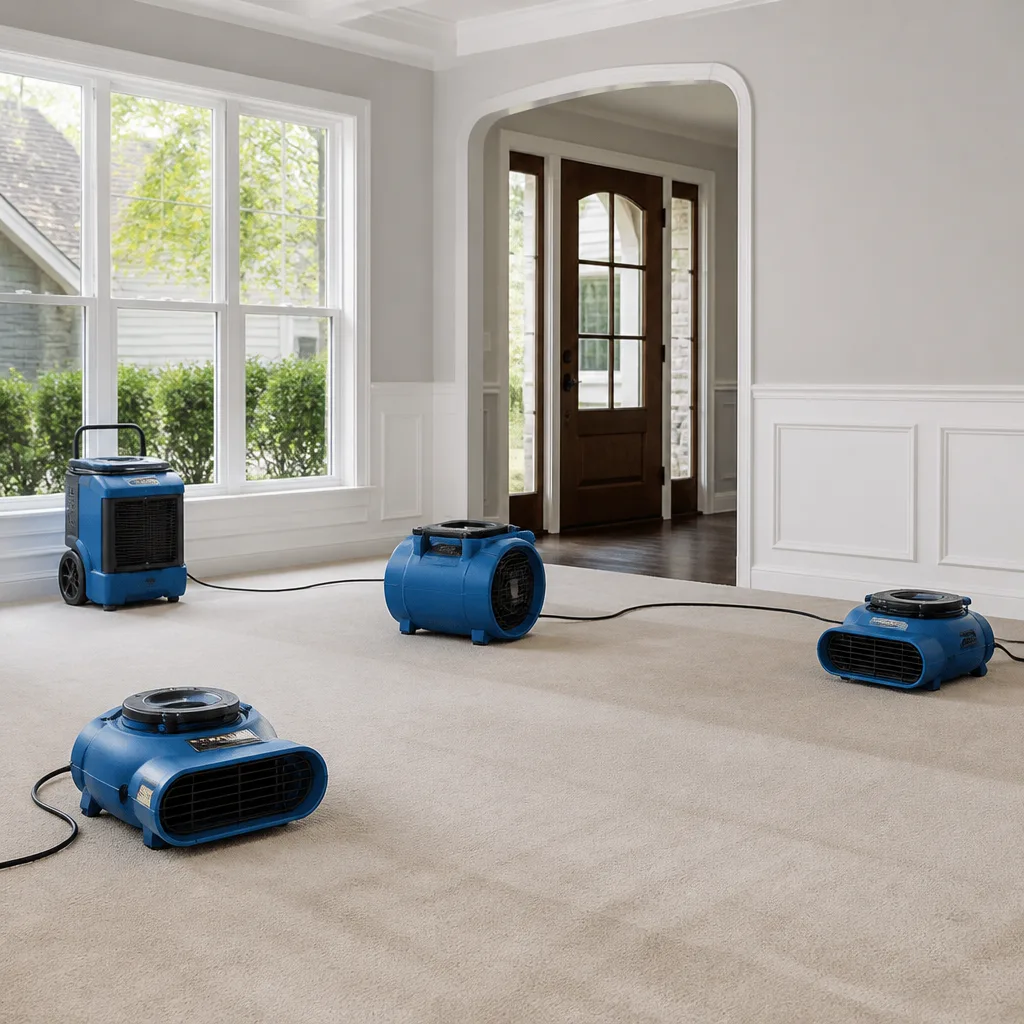 Water damage drying
 Fire & smoke cleanup
 Mold remediation
 Storm response
 Sewage cleanup
 Reconstruction
Free visual inspection and a written scope of work before any mitigation begins - photos, moisture readings, and drying logs go in your claim file
The scope we write is the scope we bill. Anything new gets shown to you, in writing, before we touch it.
Get your free estimateDamage Restoration Cost Breakdown: The Hempstead Homeowner’s Reference for 2026
The same water damage job can be quoted at $2,200 or $9,000 by two licensed contractors, not because one is dishonest, but because they’re scoping the job under completely different damage categories. One is quoting Category 1 cleanup with drying. The other is quoting Category 3 contamination requiring full tear-out, antimicrobial treatment, and rebuild. Both numbers can be technically correct. The problem is that nobody explained the difference to you before you had to make a decision. This guide walks through the three variables that actually drive restoration pricing in Hempstead: square footage, moisture category, and material type. For a deeper look at local warning signs, see our Damage Restoration Warning Signs: A Hempstead Homeowner’s Reference Guide. Once you understand those, you can evaluate any contractor’s quote in under five minutes instead of guessing if you’re being overcharged.
Quick Answer
Water damage restoration in Hempstead typically costs between $3.50 and $9.00 per square foot, with most 200 sq ft basement jobs landing between $2,500 and $7,500 depending on the IICRC water category, moisture class, and whether walls or flooring need tear-out versus drying only. A Category 1 clean water dry-out for that same 200 sq ft basement can run $1,800 to $3,200, while the identical space with Category 3 sewage backup often exceeds $8,000 once disposal, antimicrobial treatment, and rebuild labor are factored in.
Restoration work we handle
Table of Contents
- Water Categories: The Single Biggest Driver of Your Quote
- Moisture Classes: Why Drying Equipment Days Vary So Much
- Real Cost Per Square Foot in Hempstead for 2026
- Structural Drying vs. Full Tear-Out: A 200 Sq Ft Basement Compared
- The Five Invoice Line Items You Should Always Ask About
- What a Written Price Guarantee Actually Means in Practice
- Hempstead-Specific Factors That Change Your Price
- How Insurance Fits Into Your Restoration Bill
Water Categories: The Single Biggest Driver of Your Quote
The IICRC (Institute of Inspection, Cleaning and Restoration Certification) classifies water damage into three categories. These categories exist for a reason: the contamination level of the water changes the labor, the PPE, the disposal, and the materials. Most homeowners in Hempstead have never heard of them, but they explain the widest price gaps between quotes.
Category 1: Clean Water
This is water from a broken supply line, a failed water heater, an overflowing bathtub with no contaminants, or rainwater that hasn’t touched building materials yet. Category 1 water presents no immediate health risk from contact, which means technicians can work in standard protective gear, salvaged materials can be dried in place, and disposal costs stay low. In Hempstead, Category 1 extraction and drying for a 200 sq ft basement generally runs $1,800 to $3,200. The work is mostly equipment-heavy: extraction, air movers, dehumidifiers, and monitoring. Labor is typically 25 to 30 percent of the bill.
Category 2: Gray Water
Gray water contains significant contamination: washing machine overflow, dishwasher discharge, toilet overflow with urine only, or clean water that sat for more than 48 hours and started growing bacteria. Category 2 changes the job in three ways. Technicians wear more protective gear. Affected porous materials like carpet padding and some drywall often get cut out rather than dried. And antimicrobial treatment gets added to the scope. Hempstead pricing for Category 2 on that same 200 sq ft basement typically lands between $3,500 and $6,000. The jump from Category 1 reflects the added labor for controlled demolition, the cost of treating surfaces, and higher disposal fees for removed materials. Not sure whether to tackle it yourself or call a pro? Read our DIY vs Professional Damage Restoration: The Hempstead Homeowner’s Decision Guide.
Category 3: Black Water
Category 3 is grossly contaminated: sewage, rising floodwater, groundwater, or any water that’s been in contact with feces or other hazardous biological material. This is the category where costs escalate fastest. Every porous material touched by Category 3 water is removed, not dried: carpet, padding, drywall, insulation, some trim. Hard surfaces get cleaned, then treated with antimicrobial agents. Technicians work in full PPE, and all removed material is bagged and disposed of as contaminated waste. In Nassau County, Category 3 restoration for a 200 sq ft basement routinely runs $7,000 to $12,000, and if the sewage reached finished walls, the rebuild portion can push that higher. Hempstead’s older housing stock makes this category particularly relevant: cast iron drain lines in pre-1970 homes are known for cracking, and when one gives way under a slab, the resulting flood is almost always Category 3. Before starting work, check Damage Restoration Permits, Codes & Inspections in NY: What You Need to Know.ays Category 3.
Moisture Classes: Why Drying Equipment Days Vary So Much
Most quotes list “drying equipment” as a lump sum. The number behind that sum comes from moisture class, a separate IICRC designation that measures how much water has been absorbed into the structure. The class determines how many commercial drying units are needed, how long they run, and what the daily equipment charge adds up to.
- Class 1: Minimal absorption. Only a small area is wet, and most materials haven’t soaked deeply. A 150 sq ft bathroom floor after a supply line breaks can be Class 1. Expect 1 to 2 air movers and 1 dehumidifier, running 2 to 3 days. Equipment charges in Hempstead typically run $175 to $300 per day for this class.
- Class 2: Significant absorption into carpets, cushioning, and lower drywall. A burst pipe that ran overnight into a finished basement is usually Class 2. Expect 4 to 6 air movers plus 1 to 2 LGR dehumidifiers running 3 to 4 days. Daily equipment charges of $350 to $550 are common.
- Class 3: Water has wicked up walls, saturated ceilings, and fully soaked most of the room. This is a ceiling leak that went unnoticed for a weekend, or a pipe burst in a wall cavity above the living room. Drying a Class 3 loss often requires Injectidry wall-cavity drying systems in addition to floor equipment, with daily charges reaching $600 to $900, running 4 to 6 days.
- Class 4: Water is trapped in low-permeability materials: hardwood, plaster, concrete, brick. Hempstead basements with finished concrete floors over sub-slab moisture are classic Class 4. This class needs specialized drying systems, sometimes desiccant dehumidifiers, and can run 5 to 7 days. Daily equipment charges of $800-plus are not unusual because the equipment list is longer and the monitoring is more intensive.
Here’s the part that catches homeowners off guard: two quotes for the same room can vary by $1,500 because one contractor priced Class 2 drying while another priced Class 3. Ask the contractor to state the moisture class in writing. It’s a three-digit answer that tells you exactly what you’re paying for. In our experience in Hempstead, contractors who can’t or won’t name the class on the quote are usually guessing, and guesses tend to get padded.
Real Cost Per Square Foot in Hempstead for 2026
Hempstead restoration pricing tracks slightly above the Nassau County average for two reasons. First, the housing stock is older on average than neighboring communities: much of Hempstead’s residential inventory was built between 1920 and 1970, which means plaster walls, real hardwood, and dense framing that absorb water differently than modern drywall-over-stud construction. Second, labor rates for IICRC-trained technicians on Long Island have climbed steadily over the last three years, and 2026 is no exception.
| Scope | Typical Range (2026) | What It Includes |
|---|---|---|
| Category 1 drying only, 200 sq ft | $1,800 – $3,200 | Extraction, equipment, monitoring, no tear-out |
| Category 2 with selective demolition, 200 sq ft | $3,500 – $6,000 | Carpet/pad removal, antimicrobial treatment, drying |
| Category 3 full tear-out, 200 sq ft | $7,000 – $12,000 | Contaminated material disposal, treatment, rebuild-ready |
| Mold remediation, 100 sq ft | $1,500 – $4,000 | Containment, HEPA filtration, removal, treatment |
| Water damage repair after drying | $2.50 – $8.00 / sq ft | Drywall, paint, trim, flooring replacement |
These are real 2026 Nassau County market ranges, not national averages pulled from a cost database that doesn’t know Long Island labor economics. A Hempstead homeowner with a 500 sq ft finished basement should expect the Category 2 scenario to run between $8,750 and $15,000 all-in, with the repair phase often accounting for a third of that total once drying is complete. The full scope of Water Damage Restoration in Hempstead includes both the mitigation phase (extract, dry, treat) and whatever follows.
Structural Drying vs. Full Tear-Out: A 200 Sq Ft Basement Compared
The single most consequential scoping decision on a basement job is whether materials get dried in place or removed. This one choice determines whether your bill is $3,000 or $8,000. Here is the itemized breakdown for a 200 sq ft finished basement with Category 2 water damage in Hempstead.
Option A: Structural Drying Only
- Water extraction: $350 to $600. Truck-mounted or portable extractor removes standing water. 1 to 2 hours.
- Equipment rental (4 air movers, 2 LGR dehumidifiers): $1,050 to $1,650 for a 3-day drying period. This is the largest single line item in a drying-only scope.
- Psychrometric monitoring (tracking the air’s moisture level so we know when your home is truly dry, not just surface-dry): $150 to $300. Daily readings confirm drying progress.
- Antimicrobial treatment: $300 to $600. Applied to all affected surfaces.
- Labor: $450 to $800. Setup, extraction, monitoring visits, equipment pickup.
- Total: $2,300 to $3,950.
This option works when water exposure was recent (under 48 hours), the drywall is in decent shape, and the carpet pad hasn’t soaked through. The tradeoff: you save thousands, but the drying process takes 3 to 5 days and you may need cosmetic touch-ups after.
Option B: Full Tear-Out with Rebuild-Ready Finish
- Controlled demolition: $800 to $1,200. Carpet, pad, lower drywall, wet insulation removed and staged for disposal.
- Disposal fees: $400 to $800. Hempstead transfer station rates plus hauling for contaminated material.
- Equipment (shorter run, lower count): $600 to $900. Removing wet material means less drying time, often 1 to 2 days.
- Antimicrobial treatment: $500 to $900. Applied to exposed framing, concrete, and surrounding surfaces.
- Labor: $1,200 to $2,200. Demo, treatment, moisture verification, project management.
- Total for mitigation phase: $3,500 to $6,000.
- Rebuild phase (drywall, insulation, trim, paint, new carpet): $3,000 to $5,500 for 200 sq ft. This is the part that makes the final bill feel like a renovation, because it is one.
- Grand total with rebuild: $6,500 to $11,500.
The rebuild numbers above are where Water Damage Repair in Hempstead becomes its own scope of work: scoped, scheduled, and priced in writing like a remodel rather than an emergency response. No same-day dispatch on repair work, because repair work should never be rushed.
The Five Invoice Line Items You Should Always Ask About
Restoration invoices use industry shorthand that most homeowners never question. Here are the five line items most often accepted without challenge, and what each one actually means.
- “Administrative fee” or “project coordination fee” – This can add $250 to $900 to a job. Ask what it covers. Document management and adjuster communication are real work, but that work should be described, not abstracted into a percentage.
- “Emergency call-out charge” – Legitimate if the call came at 2 a.m. and the crew arrived at 3 a.m. But if you called at noon on a Tuesday and there’s still a $300 “emergency” line, that’s a flag. Hempstead is dense enough that drive time is rarely more than 30 minutes.
- “Disposal” as a percentage of materials – Disposal should be a line item tied to estimated cubic yards or load count, not a percentage of your total. Percentages silently inflate on bigger jobs.
- “Drying equipment: 14 days” on a 4-day job – Equipment charges should match the documented drying log. If the contractor can’t show you daily moisture readings that justify each day of equipment, you’re paying for days the machines weren’t needed.
- “Antimicrobial application” with no product named – Broad-spectrum antimicrobials are legitimate and effective. But the product should be nameable and the application rate should be spec’d. If neither is on the invoice, ask for the spec sheet.
None of these line items are inherently dishonest. The problem is that they’re often presented as non-negotiable boilerplate when they should be scoped and justified like everything else. A written price before work starts means every one of these is visible before you sign.
What a Written Price Guarantee Actually Means in Practice
Here’s how the pricing guarantee at Wendell Restoration Hempstead home works, because “written price” gets thrown around a lot and most homeowners don’t know what to ask for.
A written price guarantee means the scope of work is locked before any tools come out of the truck. The technician walks the affected area, identifies the water category and moisture class, maps the drying footprint, and writes a line-item scope. You get that scope in writing, with every number visible. The price on that document is the price on the final invoice. No rounding up for “unforeseen difficulties” that were foreseeable to any trained eye.
That does not mean the price can never change. It means the price only changes through a signed change order that you approve before the additional work happens. If a wall comes down and reveals rot that no moisture meter could have detected through three layers of plaster, that’s a discovered condition. The technician explains it, shows you photos, prices the additional scope, and gets your signature before proceeding. The alternative, and the way many restoration companies operate, is to start work on a vague estimate and then present a much larger final bill with “discovered damage” listed as justification. That’s not discovery. That’s selling after the fact.
Wendell holds every job to three standing terms: a written price before any work starts, a written guarantee on every repair, and a free second visit if the repair fails. The 365-Day Done Right Promise states it plainly: if it’s not done right, we make it right. All of this is part of The Relay Standard, the process framework Wendell operates under as part of the Relay Home Co. family, founded in 2006.
Hempstead-Specific Factors That Change Your Price
Hempstead is not a generic Long Island suburb, and restoration pricing reflects that. A few local factors move the number materially.
Older homes with plaster and true dimensional lumber. Plaster absorbs water slower than drywall but holds it longer, and it’s far more expensive to repair properly. If your 1920s colonial in Hempstead takes on water, expect the drying phase to run one to two days longer than a comparable drywall home in a newer development. That’s extra equipment days at real money.
Finished basements are common but rarely built to modern moisture standards. Many Hempstead basements were finished decades ago without proper vapor barriers or subfloor insulation. When those spaces flood, the water wicks into materials that should have been moisture-resistant from the start, pushing jobs from Category 1 drying into Category 2 demolition quickly.
Street-level humidity in summer. July and August in Hempstead regularly hit dew points above 70°F. Open basement doors during a restoration project introduce humid outside air, which slows drying and adds equipment days. Competent contractors account for this; lazy ones just bill you for the extra days.
Municipal sewer line age. Hempstead’s sewer infrastructure includes older clay and cast iron runs, and root intrusion into lateral lines is common in the village’s older neighborhoods. When a lateral backs up, the water in your basement is Category 3. This is not rare in Hempstead; it happens regularly enough that we mention it during quote walkthroughs.
Mold remediation is a separate but adjacent scope. If water has sat for more than 72 hours, or if the category is 2 or 3, mold becomes a real variable. Mold Remediation in Hempstead has its own pricing structure, its own containment requirements, and its own timeline, and it should never be bundled into a water mitigation quote as a vague “mold treatment” line.
How Insurance Fits Into Your Restoration Bill
Most Hempstead homeowners with standard HO-3 policies have coverage for sudden and accidental water damage: burst pipes, appliance failures, and sewer backups when sewer backup coverage has been purchased as an endorsement. The adjuster’s job is to approve a scope that returns your home to pre-loss condition, not to itemize your restoration bill into submission. That distinction matters.
A restoration contractor who documents everything makes the adjuster’s job easier and your claim faster. Photo documentation, written moisture readings, daily drying logs, and an itemized scope aligned to IICRC standards are the difference between a claim that gets paid and a claim that gets negotiated for weeks. Using professional-grade equipment from Dri-Eaz, Phoenix, and XPOWER matters here too, because adjusters recognize those brand names and the drying data they generate.
You work with your adjuster; your contractor should be prepared to coordinate with them directly. Ask any restoration company whether they handle adjuster communication before you sign. If the answer is hesitant, that’s a signal about how many claims they’ve actually worked.
Common Mistakes to Avoid
- Accepting the first quote without asking for the water category. Two contractors scoping the same Hempstead basement under different categories can be $4,000 apart. Ask for the category in writing.
- Not checking equipment days against the drying log. You should be able to see daily moisture readings that justify every day of equipment on your invoice. No readings, no days.
- Letting a contractor start work before you have a written scope. Verbal estimates are not estimates. If there’s no line-item document, there’s no price agreement.
- Choosing the cheapest quote on a Category 3 job. Sewage contamination is the one scenario where cutting scope cuts safety. Full containment, full disposal, and proper antimicrobial treatment cost real money.
- Ignoring the repair phase when budgeting. Drying is half the job. The rebuild is the other half, and Hempstead drywall and flooring labor is not cheap.
- Assuming insurance covers everything without checking your sewer backup endorsement. It’s an optional coverage on most Long Island policies, and a lot of Hempstead homeowners find out they don’t have it the hard way.
- Waiting to call because you think it’s not that bad. Water that sits for 48 hours becomes a different, more expensive problem. Hempstead summer heat accelerates mold growth faster than most people realize.
See the difference
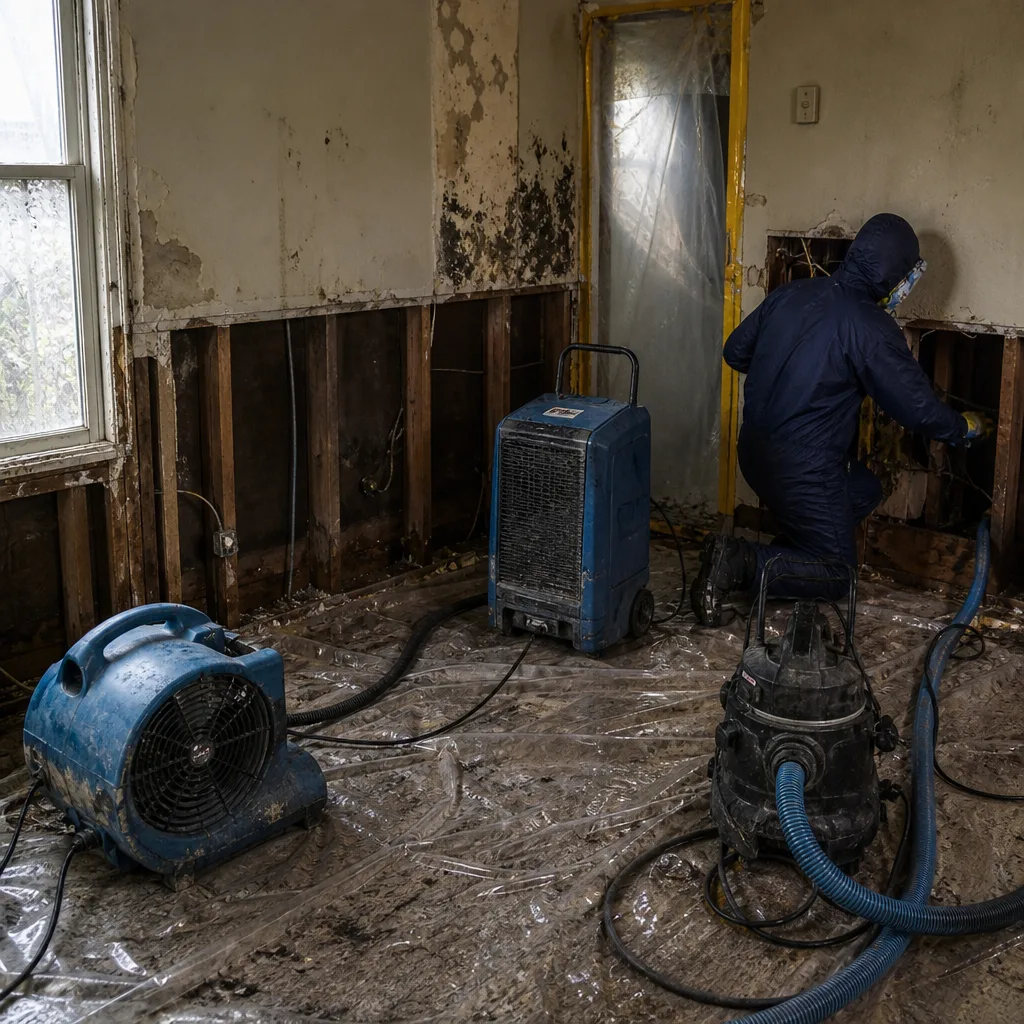 Before
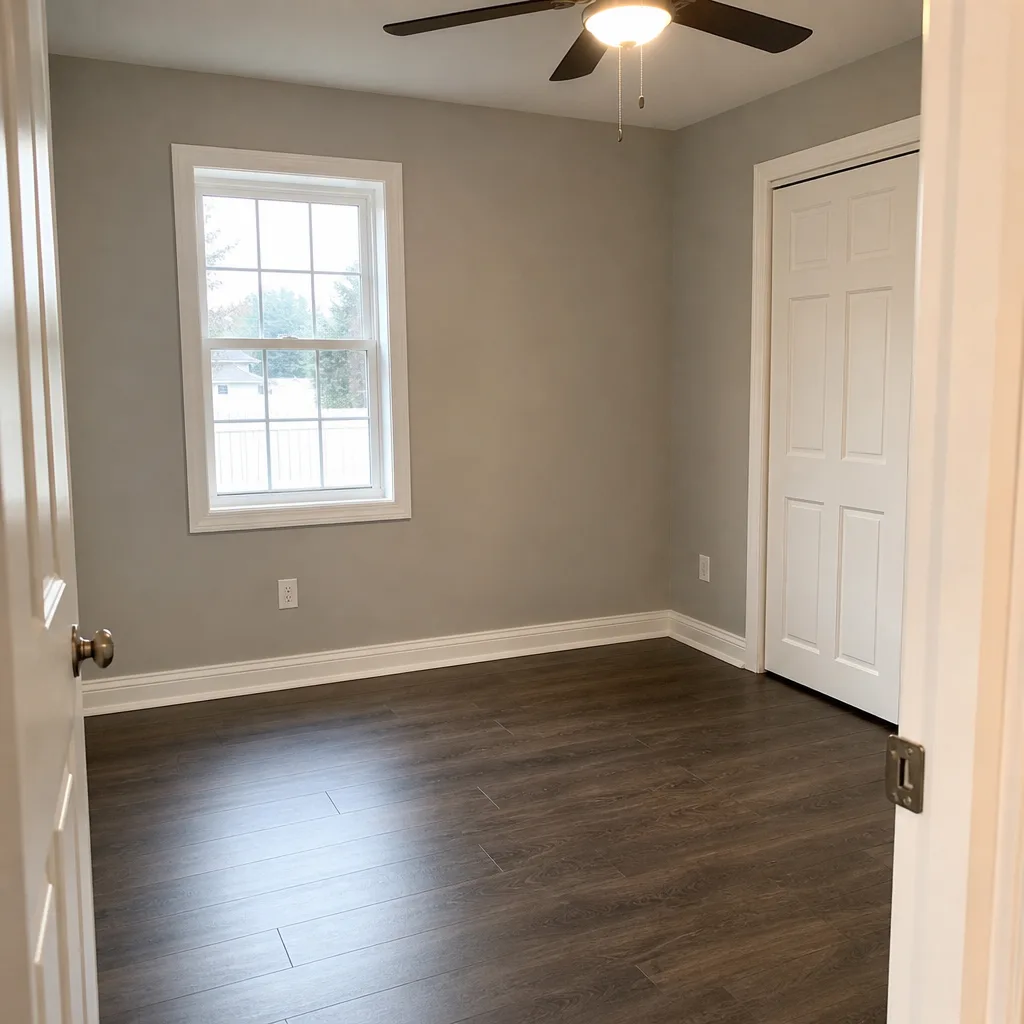 After
After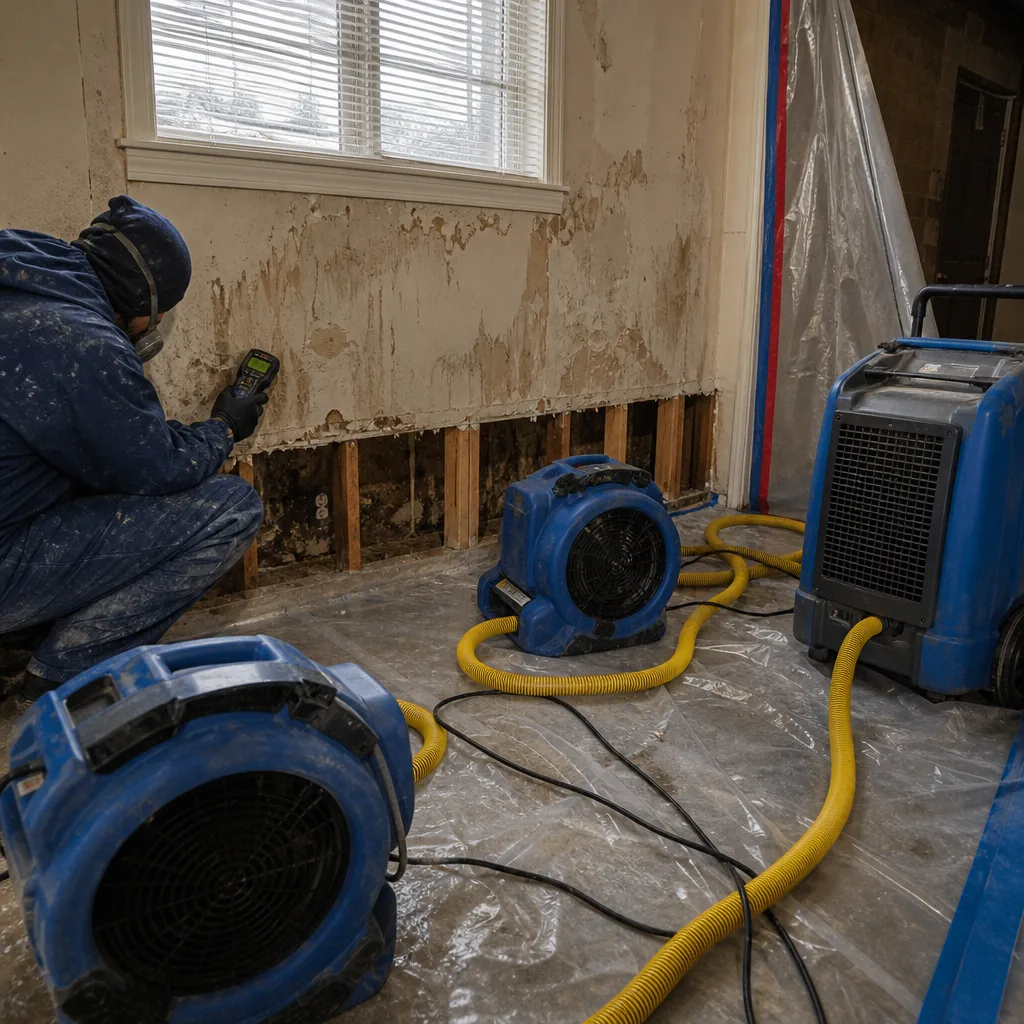 Before
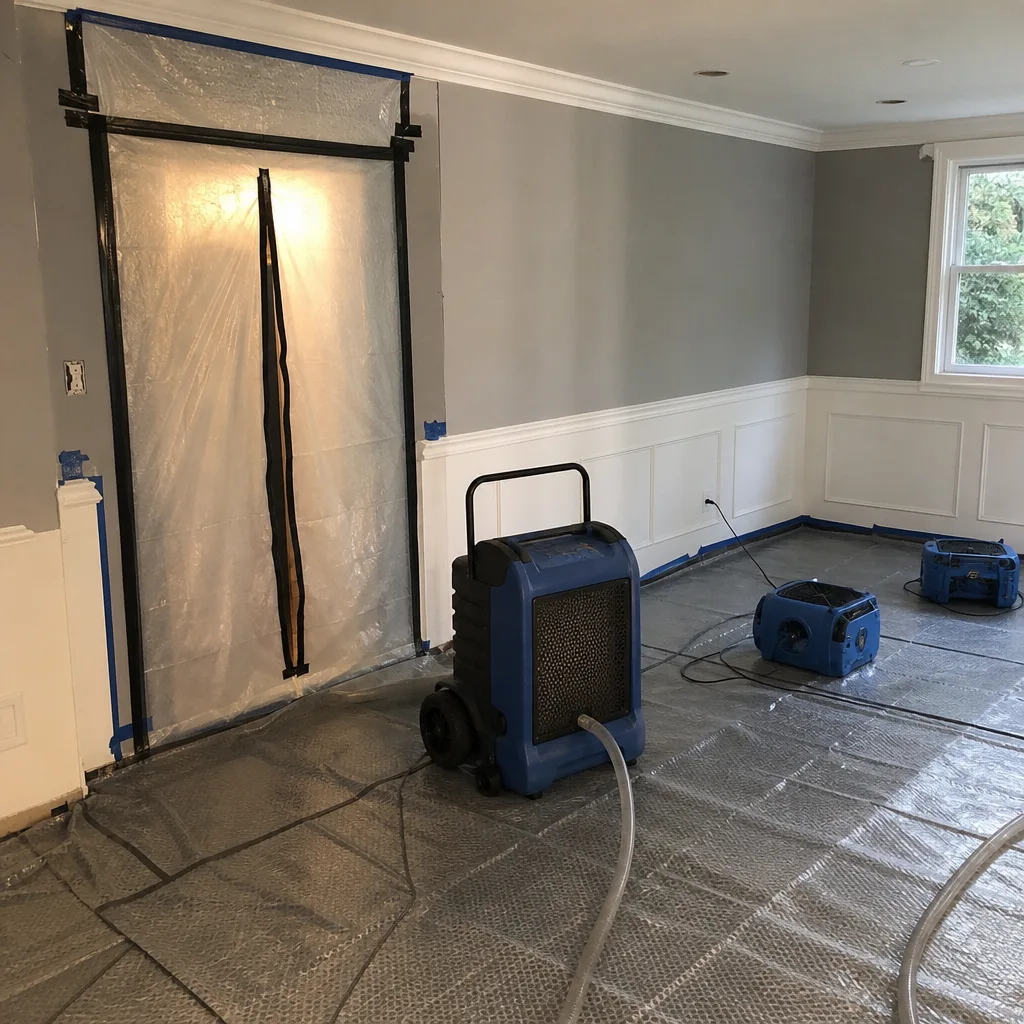 After
After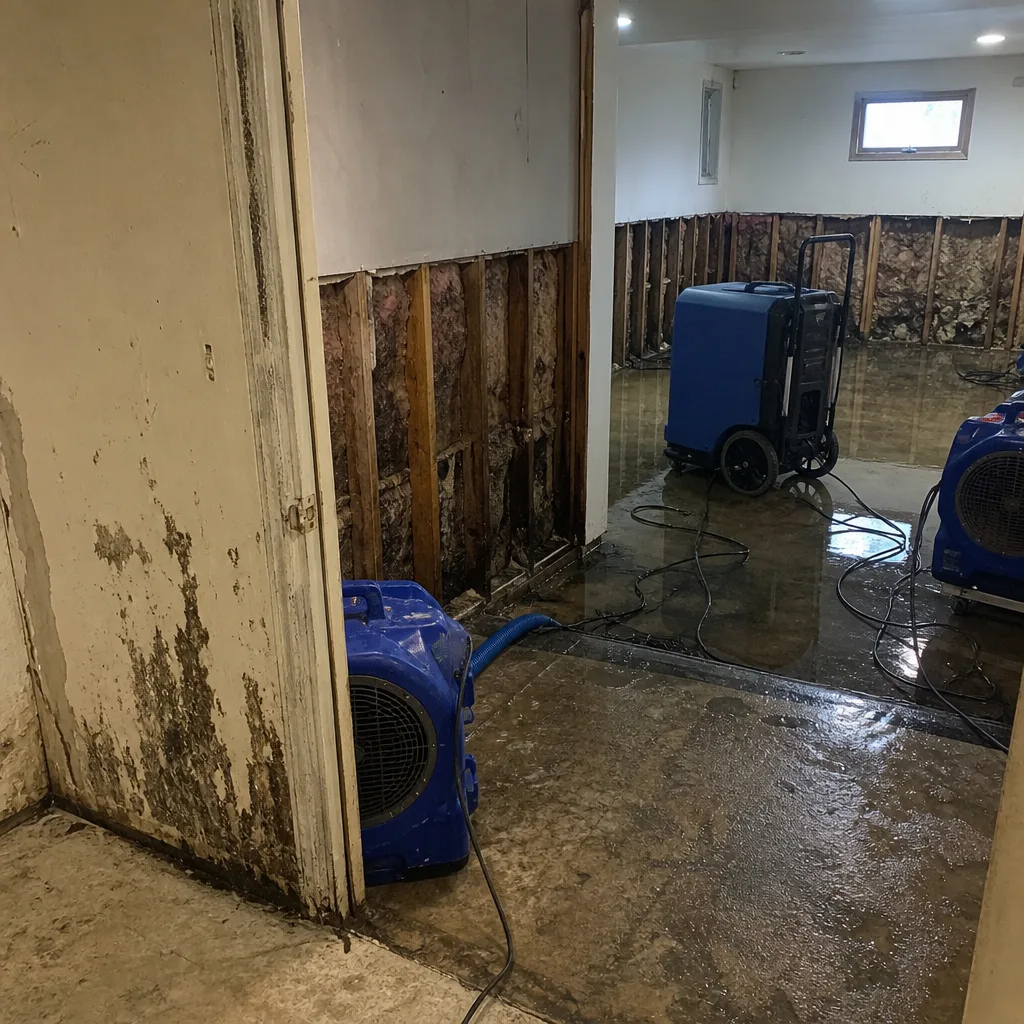 Before
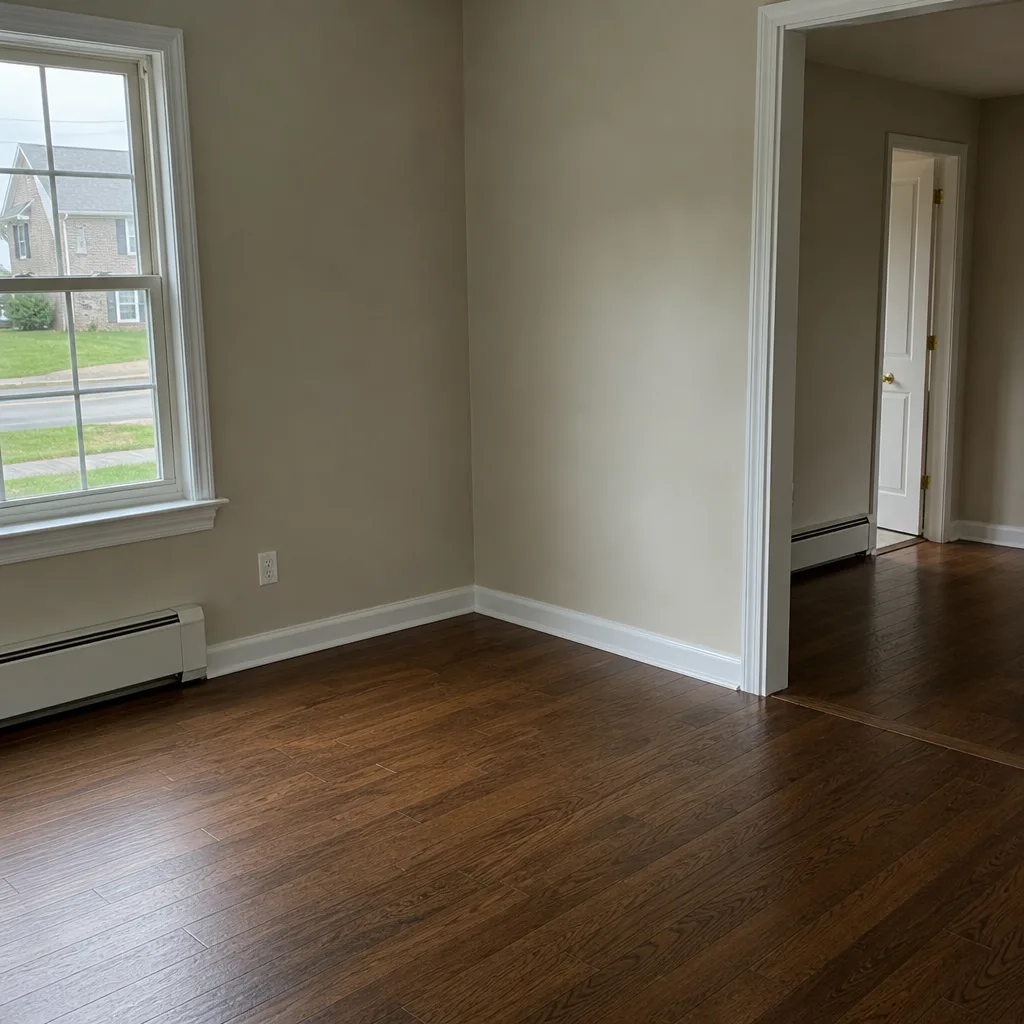 After
AfterWhen to Call a Professional
Call a restoration contractor the moment water touches drywall, flooring, or anything with a porous surface that you can’t dry completely yourself within 24 hours. If the water came from a drain line, a sewer line, or a toilet overflow, don’t attempt cleanup at all: Category 3 water requires PPE, proper disposal, and antimicrobial treatment that no paper towel and bleach mixture can replicate. If you smell mustiness after a leak you thought you handled, mold has likely already established itself. Wendell Restoration Hempstead offers free estimates in Hempstead. Call (516) 559-6972 and a live person answers, 24/7. Background-checked, uniformed technicians arrive with a live arrival time you can track, not a vague four-hour window.
Frequently Asked Questions
Most Hempstead water damage restoration jobs run between $3.50 and $9.00 per square foot, with a typical 200 sq ft basement costing $2,500 to $7,500 depending on water category and moisture class. Category 1 drying lands at the low end, Category 3 sewage tear-out at the high end. Call (516) 559-6972 for a written quote specific to your situation; estimates are free.
Standard HO-3 policies cover sudden and accidental water damage from burst pipes and appliance failures, but sewer backup is an optional endorsement that many Hempstead homeowners don’t have unless they specifically added it. Your restoration contractor should provide photo documentation and written drying logs to support your claim, and should be willing to coordinate directly with your adjuster.
Immediately, in most cases. A live person answers every call to (516) 559-6972, 24/7, and mitigation teams can generally be on-site in Hempstead within an hour of your call because water damage doesn’t keep business hours and neither do we.
If the water is Category 3 (sewage, groundwater, floodwater), contained in materials for more than 48 hours, or has wicked into drywall, full remediation is genuinely necessary because contaminated porous materials can’t be effectively cleaned by surface treatment alone. Ask your contractor to show you the moisture readings and explain the category before agreeing to a scope. If they can’t explain it, get a second opinion.
You do, with your contractor’s support. A restoration company working on insurance claims should provide the adjuster with photo documentation, moisture readings, drying logs, and an itemized scope that aligns with IICRC standards. Wendell coordinates this directly as part of the process, but the claim itself remains yours.
Mitigation is the emergency response: water extraction, equipment setup, drying, antimicrobial treatment. It happens immediately and often runs 3 to 5 days. Repair is the restoration phase: drywall replacement, painting, flooring, trim. It’s scoped, scheduled, and priced in writing like a remodel, not an emergency. Both are covered under the broader restoration umbrella, but they’re distinct scopes with distinct pricing structures.
The Bottom Line
Restoration pricing in Hempstead comes down to three variables: the amount of affected square footage, the IICRC water category, and the moisture class that determines how long equipment runs. Once you can identify those three numbers on a quote, you can compare contractors on equal footing instead of guessing. The biggest pricing gaps come from scoping differences, not contractor honesty. Demand a written price before work starts, a written guarantee on repairs, and a contractor who can explain every line item in plain language. The number on your screen should be the number you pay.
Written by Blake Sorensen, Owner at Wendell Restoration Hempstead, serving Hempstead since 2006.