
Last updated October 16, 2026
 Water damage drying
 Fire & smoke cleanup
 Mold remediation
 Storm response
 Sewage cleanup
 Reconstruction
Free visual inspection and a written scope of work before any mitigation begins - photos, moisture readings, and drying logs go in your claim file
The scope we write is the scope we bill. Anything new gets shown to you, in writing, before we touch it.
Get your free estimateDIY vs Professional Damage Restoration: The Hempstead Homeowner’s Decision Guide
Here’s a number that should stop you cold: mold doubles its population every 24 hours once wall cavity humidity climbs above 60%. That means the gap between a $400 dry-out and a $14,000 mold remediation job in Hempstead is often about 48 hours. This guide walks through the exact decision tree we use on job sites across Nassau County, so you can tell in ten minutes whether you’re dealing with a wet-vac weekend or a structural drying emergency. For year-round prevention tips, see our Water Damage Restoration Maintenance Checklist for Hempstead Homeowners. We’ll cover what consumer equipment actually does, what your insurance policy expects, and the three tasks that are genuinely, safely yours to do before anyone arrives.
Quick Answer
DIY water damage restoration is viable only when the water is Category 1 (clean, from a supply line), has been present for under 24 hours, and hasn’t penetrated walls, insulation, or subfloor. If any of those three conditions fails, professional drying with commercial low-grain refrigerant (LGR) dehumidifiers and cavity drying equipment is required to prevent mold and structural damage. In Hempstead’s humid climate, the margin for error is narrower than homeowners expect.
Restoration work we handle
Table of Contents
- The Three Factors That Actually Decide DIY vs Professional
- Water Categories: What’s in the Water Matters More Than How Wet It Is
- Consumer-Grade Equipment vs Commercial LGR Dehumidifiers: The Real Math
- Why Hempstead’s Climate Works Against DIY Drying
- Insurance Implications: What “Reasonable Mitigation” Means on a Claim
- Antimicrobial Treatment: What It Is, What It Isn’t, and Why It Needs Cavity Access
- The Three DIY Tasks You Can Start Right Now
- The Hempstead Homeowner’s Decision Tree
The Three Factors That Actually Decide DIY vs Professional
Most homeowners frame the question wrong from the start. They ask themselves, “Am I handy enough to handle this?” That’s the wrong question. The right question is whether the conditions on site are ones that any amount of skill can safely dry. We’ve seen skilled carpenters, electricians, even building superintendents call us after realizing their DIY dry-out failed, not because they lacked ability, but because they were fighting physics with equipment that was never built for the job.
Three factors determine the answer, and they’re objective, not a judgment call:
- Water category. Clean water from a supply line (Category 1) is a very different problem from dishwasher discharge, washing machine overflow, or anything that touched a drain (Category 2) or sewage and floodwater (Category 3). Categories 2 and 3 are never DIY, full stop. They carry bacteria that spread during drying and require containment and antimicrobial treatment.
- Hours elapsed. The clock starts the moment water makes contact with drywall, wood, or carpet pad. Under 24 hours with clean water, you have a window. Beyond 24 hours, even clean water in warm, humid Hempstead air starts growing things you don’t want in your walls.
- What’s behind the affected surface. If water has wicked into wall cavities, under baseboards, beneath vinyl plank flooring, or into subfloor, you cannot see the extent of the damage from the surface. Thermal imaging cameras and moisture meters read what your eyes can’t, and that defines the scope of drying.
If you score clean water, under 24 hours, and confirmed surface-only damage, you can attempt a controlled DIY dry-out. If any one of those factors fails, the math changes. We’ve written this guide so you can run that assessment yourself, in ten minutes, without calling anyone.
Water Categories: What’s in the Water Matters More Than How Wet It Is
The restoration industry classifies water damage into three categories under IICRC S500, the standard reference for professional water damage restoration. The category has nothing to do with how much water there is. It’s about what’s in it.
Category 1: Clean water. This comes from a broken supply line, a faucet left running into a sink that overflowed briefly, a water heater that hasn’t been sitting, or rainwater that came through a roof with no insulation contact. Category 1 water is safe to handle and is the only category with any real DIY potential. Do it quickly, though. Within 24 to 48 hours in a warm Nassau County home, Category 1 water degrades into Category 2 as bacteria multiplies.
Category 2: Gray water. This includes washing machine discharge, dishwasher overflow, toilet overflow with no solid waste, and water that has been standing long enough for Category 1 to degrade. It carries significant bacterial load. The water may look clear, and that’s what fools people. If you rent a carpet cleaner and run it over Category 2 water without disinfecting, you aerosolize bacteria into the air and spread it into the pad beneath, which is exactly how a small overflow becomes a mold problem.
Category 3: Black water. Sewage, floodwater from outside, toilet backflow with waste, and any water that has sat for more than 48-72 hours. This is a health hazard. Professional remediation requires full PPE, containment barriers, and disposal under local Nassau County waste regulations. Never attempt this yourself, and don’t let a handyman do it either.
One detail Hempstead homeowners miss: proximity to the water table. Hempstead sits on Long Island’s south shore, much of it low-lying. Stormwater and shallow groundwater intrusion during heavy rain is common in basements across Uniondale, Roosevelt, and parts of Hempstead Village. Groundwater is Category 3 water. If it came in from the ground during a storm, it’s not clean rainwater. It picked up whatever was in the soil on the way in.
Consumer-Grade Equipment vs Commercial LGR Dehumidifiers: The Real Math
The single biggest equipment misconception in DIY restoration is that a big-box store dehumidifier does the same job as commercial drying equipment, just slower. It doesn’t. The difference isn’t degree, it’s kind.
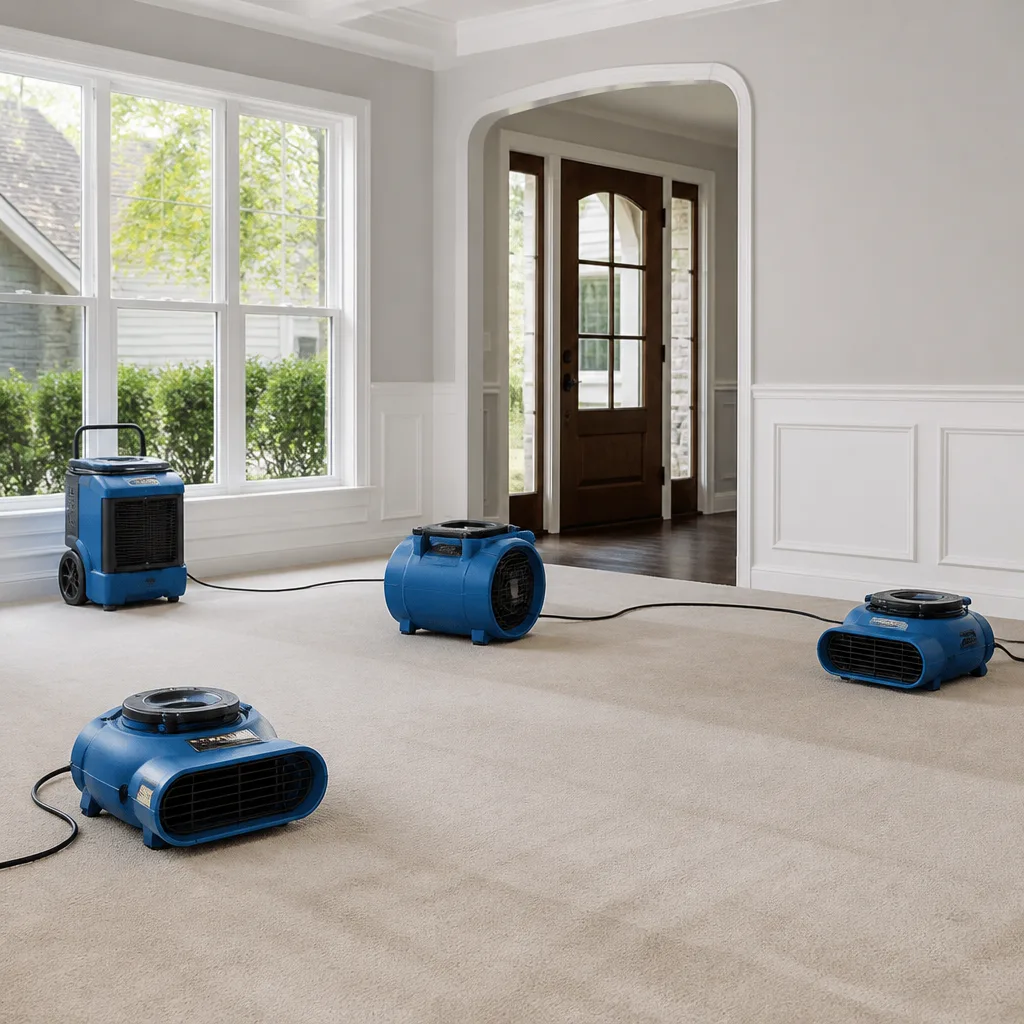
Consumer dehumidifiers use a standard refrigerant coil. They pull moisture effectively down to about 50% relative humidity, maybe 45% if you buy the expensive one and run it for a week. Commercial drying uses low-grain refrigerant (LGR) dehumidifiers, units from Phoenix and Dri-Eaz that pull air down to 35% relative humidity or lower, and keep pulling at a rate consumer units can’t match. That sub-50% pull is what creates a vapor pressure gradient that physically draws water out of drywall, wood, and concrete through evaporation. A consumer unit at 50% RH leaves wall cavities damp on the interior, which is why DIY dry-outs so often “look dry” on the surface within three days and then smell musty in three weeks.
Then there’s the air movement problem. Professional restoration crews set up axial and centrifugal air movers, not box fans. A box fan moves air in a wide, slow pattern without the velocity to create evaporative exchange at the material surface. Air movers from XPOWER and B-Air create a focused, high-velocity stream designed to push moisture-laden air off surfaces. Combined with the LGR dehumidifier, that’s the actual drying engine.
And the piece no DIY setup touches: cavity drying. When water gets behind baseboards or into wall cavities, you need an injection drying system or a floor mat system. Injectidry makes panels and hoses that push forced air into sealed wall cavities from holes drilled behind the baseboard line. Consumer equipment cannot do this. The wall cavity stays wet, mold grows in the dark, and the wall needs to be opened later anyway.
For a Hempstead homeowner, here’s the practical math: renting a consumer-grade dehumidifier from a local equipment store costs maybe $60 to $100 a day, plus air mover rental. A professional dry-out, including commercial LGR dehumidification, cavity drying, and moisture logging, typically runs $1,800 to $4,500 for a single-room water event in Nassau County. If the water is Category 1 and surface-only, the rental route can work. If the water is behind the wall, the rental route is a down payment on a bigger bill later.
Why Hempstead’s Climate Works Against DIY Drying
Hempstead’s summer climate is a drying technician’s least favorite combination: high outdoor relative humidity and warm temperatures. When outdoor RH runs 70% to 85% in July and August, any ventilation-based drying strategy fails. You can’t dry a basement by opening windows when the air outside is wetter than the air inside. And running a consumer dehumidifier while also running a box fan from an open window means the unit is fighting the outdoor air indefinitely.
This is one reason IICRC-standard drying relies on sealing the affected area and controlling the interior environment. Commercial drying creates a microclimate: high velocity airflow across wet surfaces, LGR dehumidification to pull moisture out of the air, and temperature control to accelerate evaporation. In Hempstead’s coastal humidity, especially during summer, that closed-loop approach matters even more than it does inland.
Long Island homes also tend to be older. Hempstead has a large stock of pre-1940 houses with balloon framing, plaster over wood lath, and no vapor barriers. In a balloon-framed house, water in a second-floor bathroom can run down inside wall cavities to the basement, and the visible damage is only a patch on the ceiling below. Plaster holds water differently than drywall, and it dries more slowly. A consumer drying setup in an old Hempstead plaster home is solving 20% of the problem while the other 80% stays wet indoors.
We should also name the seasonal freeze-thaw issue. Heating pipes that freeze during a Hempstead winter cold snap and burst inside walls release water directly into cavities behind insulation. That’s a classic case where the homeowner sees a small stain on the ceiling but the real damage is inside the wall. And in winter, running a consumer dehumidifier in a 65-degree house while the heat is on creates destructive condensation on windows and exterior walls. Professional drying adjusts for season.
Insurance Implications: What “Reasonable Mitigation” Means on a Claim
Almost every homeowners policy in New York includes a duty to mitigate, usually expressed as the requirement to take “reasonable and necessary” steps to prevent further damage after a covered loss. On paper, that sounds like you should start drying things yourself immediately. In practice, carriers look at two things when evaluating a claim after a DIY attempt: whether your actions reduced the eventual scope or expanded it, and whether the delay you created contributed to secondary damage.
Here’s the hard version of that, in plain language. If you rent a carpet cleaner, run it for two days, and the carpet feels dry, then you call the carrier a week later when the baseboards are swelling and the room smells musty, the adjuster can reasonably conclude that your DIY mitigation was inadequate and that the secondary mold damage is on you. We have seen claims in Hempstead where the adjuster approved the initial water extraction but contested the mold remediation that followed, arguing that the delay between first notice and professional drying was not “reasonable mitigation.” The standard for reasonable is not what a careful homeowner thinks. It’s what the industry standard (IICRC S500) says a professional would have done in the same situation.
This is also where the insurance discussion gets practical. Your insurer wants documentation. A professional restoration company like ours provides a detailed moisture map of the affected areas, drying logs showing humidity and moisture readings over multiple days, and photo documentation of every step. That’s the file your adjuster needs to approve the claim. A DIY dry-out produces none of it. If a dispute arises, you’re asking the adjuster to take your word that you did everything right, with no third-party record.
The cost comparison most Hempstead homeowners never run: professional water damage restoration in Nassau County for a single room typically runs $1,800 to $4,500, and most policies cover it minus deductible. The DIY attempt costs $300 to $700 in equipment and materials, and if it goes wrong, the mold remediation later costs $3,000 to $12,000, and your carrier may contest it. The financial incentive to DIY exists only if nothing goes wrong.
Antimicrobial Treatment: What It Is, What It Isn’t, and Why It Needs Cavity Access
The term “antimicrobial treatment” gets thrown around in restoration marketing like it’s a spray bottle and a quick wipe. It’s more than that, and understanding the difference explains a lot about why DIY drying fails in the long run.
Antimicrobial treatment in professional water damage restoration means applying an EPA-registered biocide to affected surfaces and cavities after extraction and before drying is complete. The goal is to prevent mold and bacterial growth in materials that have been wet. The key word is cavities. Water that penetrates drywall, baseboards, or flooring creates conditions inside wall systems that no surface spray can reach. Professional treatment involves drilling small access holes behind baseboard lines, injecting the biocide into wall cavities, and coating the interior surfaces of the cavity where mold would otherwise take hold during the days it takes to dry. Then the same cavities are force-dried with injection drying equipment, and the process is logged.
This is not something a homeowner can replicate. Consumer antimicrobial sprays treat the surface, and maybe the back of the baseboard if you pull it off. But the wall cavity, the space between studs where insulation soaks up water and holds it for weeks, stays untreated. And the biocide itself matters. EPA-registered products designed for structural restoration are concentrated and applied at specific dilution ratios. The big-box store options are diluted, which means a professional applies a stronger product in a targeted way. Spraying a hardware store product around a wet room feels like action. It’s not the same action.
One more thing worth naming: mold doesn’t need much. It needs moisture, a food source, and time. Drywall paper and wood framing are the food source. The water is the trigger. The clock is the only variable you control. Antimicrobial treatment expands your window of protection during the drying process, but it doesn’t replace drying. A cavity that stays wet at 70% RH for two weeks grows mold with or without treatment. The biocide delays growth. The drying stops it. Both are required.
The Three DIY Tasks You Can Start Right Now
There’s a sensible middle ground between trying to dry a wet house yourself and standing there watching water spread. While you wait for a professional to arrive, three tasks are legitimately yours, and doing them well improves outcomes regardless of what happens next.
- Stop the source. If the water is coming from a burst pipe, shut the main water valve. It’s usually in the basement, often near the front wall on a Hempstead house, or outside at the curb if you have a meter pit. If the water is from an appliance, shut the supply valve behind it. If it’s stormwater coming in, don’t wade into it to investigate. Call a professional and document from the stairs.
- Document everything. Take photos and video before you move anything. Wide shots of the room, close-ups of the water line on the wall, photos of the source, photos of any contents affected. This is the record your insurance carrier will want, and it costs you nothing. If you have irreplaceable items, photograph those separately.
- Move contents out of the water. Furniture, rugs, boxes, electronics. Anything that can be lifted by one or two people and carried out of the affected area should be moved. If furniture is too heavy or waterlogged to move safely, leave it and document it. Place aluminum foil or plastic under furniture legs still in contact with wet flooring to prevent staining, if it’s safe to reach.
What you should not do: don’t use a household vacuum to extract water, don’t pull up carpet yourself unless it’s a small area and you know what’s underneath, don’t open walls, don’t set up fans and dehumidifiers in a Category 2 or 3 situation, and don’t enter standing water in contact with electrical outlets or appliances. The gap between “I can handle this” and “I just made it worse” is often one well-intentioned decision.
The Hempstead Homeowner’s Decision Tree
Here’s the practical version of everything above, compressed into a sequence you can run in five minutes:
- What’s the water source? If it’s sewage, groundwater, or anything from a drain, stop. This is Category 3 or high-risk Category 2. Call Water Damage Restoration in Hempstead professionals now.
- When did the water event start? If more than 24 hours have passed, degradation has begun. Your DIY window is closed. Get professional drying equipment on site.
- How far has the water spread? Water on the surface of tile or sealed concrete is one thing. Water that has reached drywall, baseboards, wood flooring, carpet pad, or insulation is inside materials, and surface drying won’t reach it. If you see swelling, bubbling, or water lines above the floor, you’re dealing with cavity water.
- How humid is the room right now? In Hempstead, if you can feel humidity in the air, a consumer dehumidifier is already behind. Commercial LGR dehumidification is the only approach that pulls air low enough to create the drying gradient.
- Is this an insurance claim? If you’re planning to file, your duty to mitigate means professional-grade documentation matters. A moisture map and drying log protect your claim. A DIY dry-out creates a documentation gap your adjuster may use against you.
If any answer points toward professional drying, call us at (516) 559-6972. We tell you the price before any work starts, so you know the number even if you’re just calling to compare options. For mold concerns specifically, see Mold Remediation in Hempstead. For repairs after drying is complete, visit Water Damage Repair in Hempstead.
Common Mistakes to Avoid
- Waiting until the carpet feels dry to call. Carpet top can feel dry in two days in a Hempstead summer while the pad beneath is still holding a gallon of water per square yard. The top drying is the illusion, not the indicator.
- Renting a consumer dehumidifier and calling it a dry-out. A standard dehumidifier at 50% RH leaves cavities wet. You’re not drying the structure, you’re drying the air above it.
- Using a household vacuum on standing water. This is how electrocution happens. Wet/dry vacuums exist for a reason, and even they are not safe in standing water near outlets.
- Pulling up carpet yourself without knowing what’s under it. In older Hempstead homes, the subfloor may be damaged, and pulling soaked carpet across it causes secondary scratching and fiber damage. If the carpet is salvageable, aggressive amateur extraction ruins it. If it’s not salvageable, you’ve done work that would have been included in the professional scope anyway.
- Opening walls to “let them breathe.” Cutting into a wet wall without containment turns a localized water event into a cross-contamination issue. Drywall dust and water-damaged material particles spread through the house. Professional cavity drying does not require opening walls.
- Skipping the photo documentation before moving anything. Once you move the furniture and pull the rug, the scene no longer matches what the adjuster will see. Take photos first. Every time. Phones are free.
- Running fans toward the wet area from open windows. In Hempstead’s humid climate, you’re pumping more moisture into the structure. A drying environment must be sealed and controlled, not ventilated to outdoor air that’s 75% RH.
See the difference
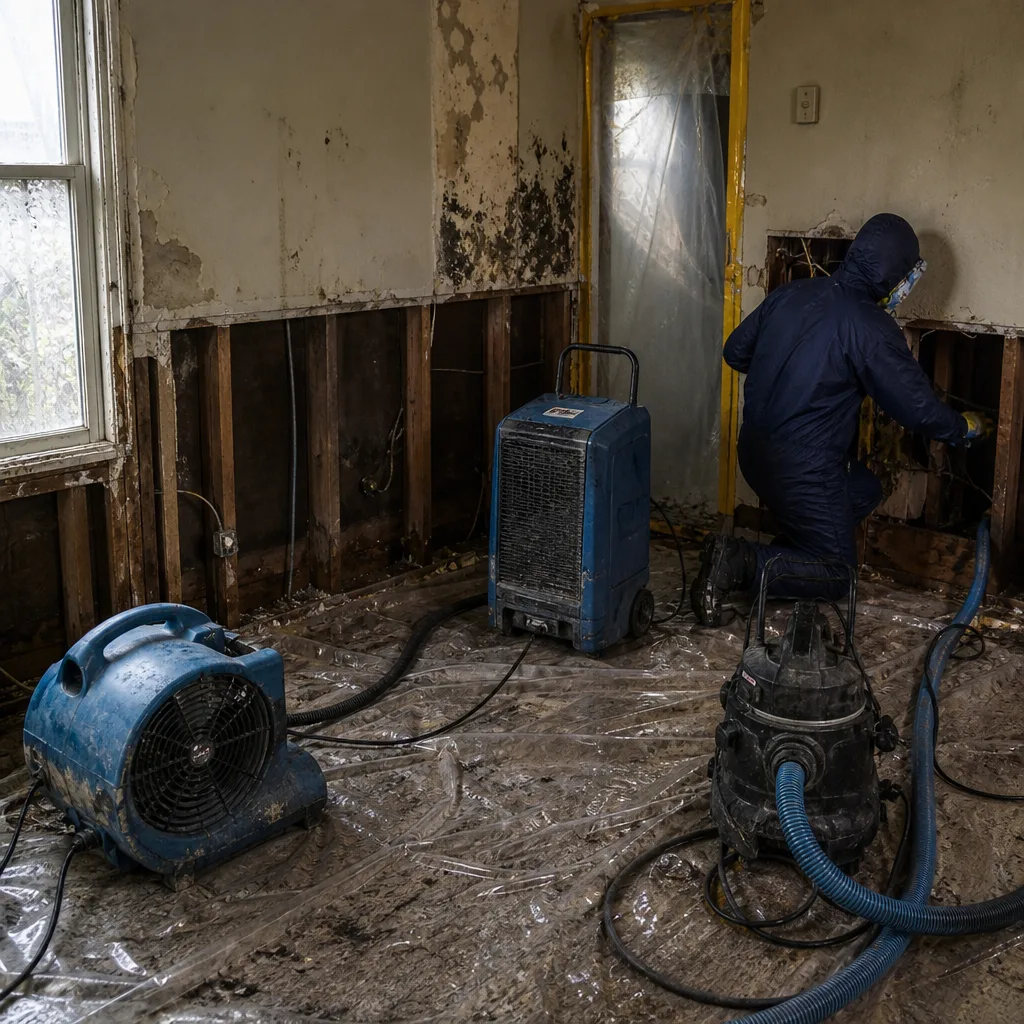 Before
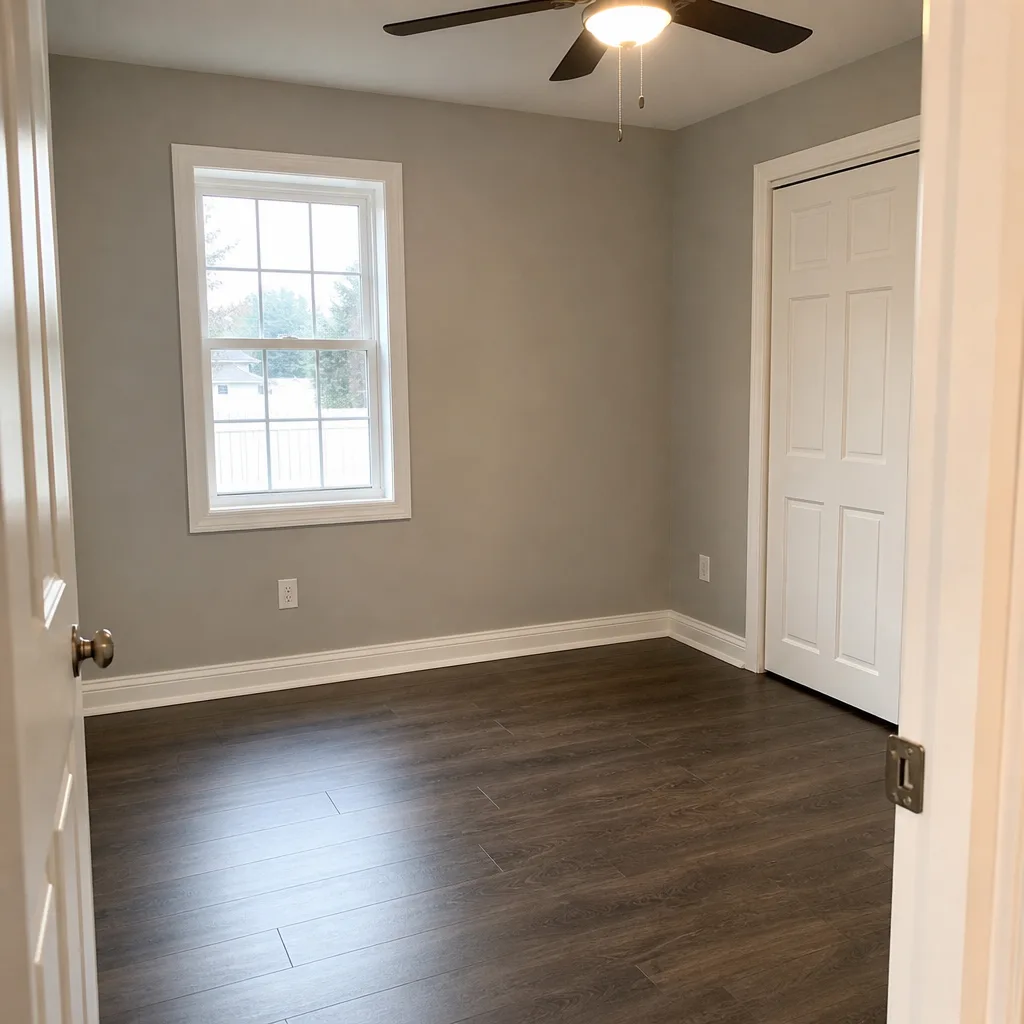 After
After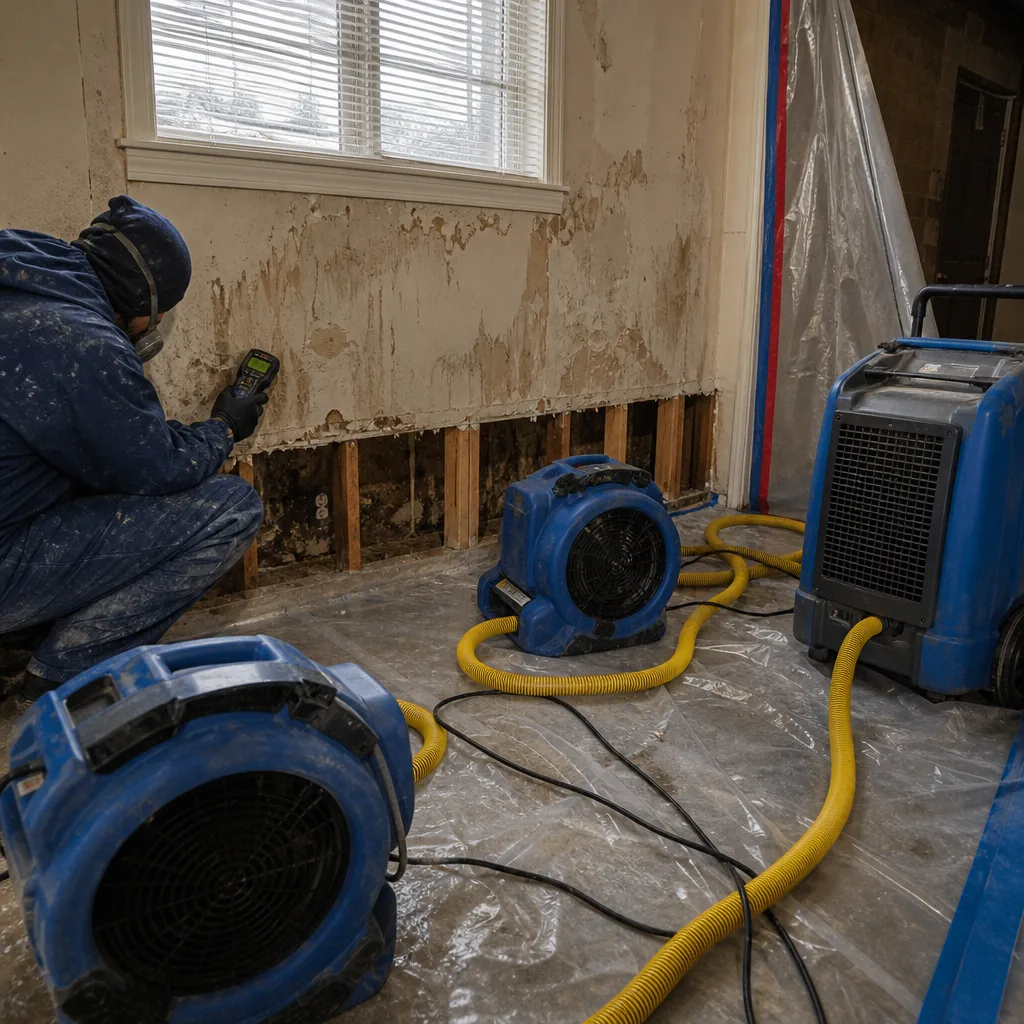 Before
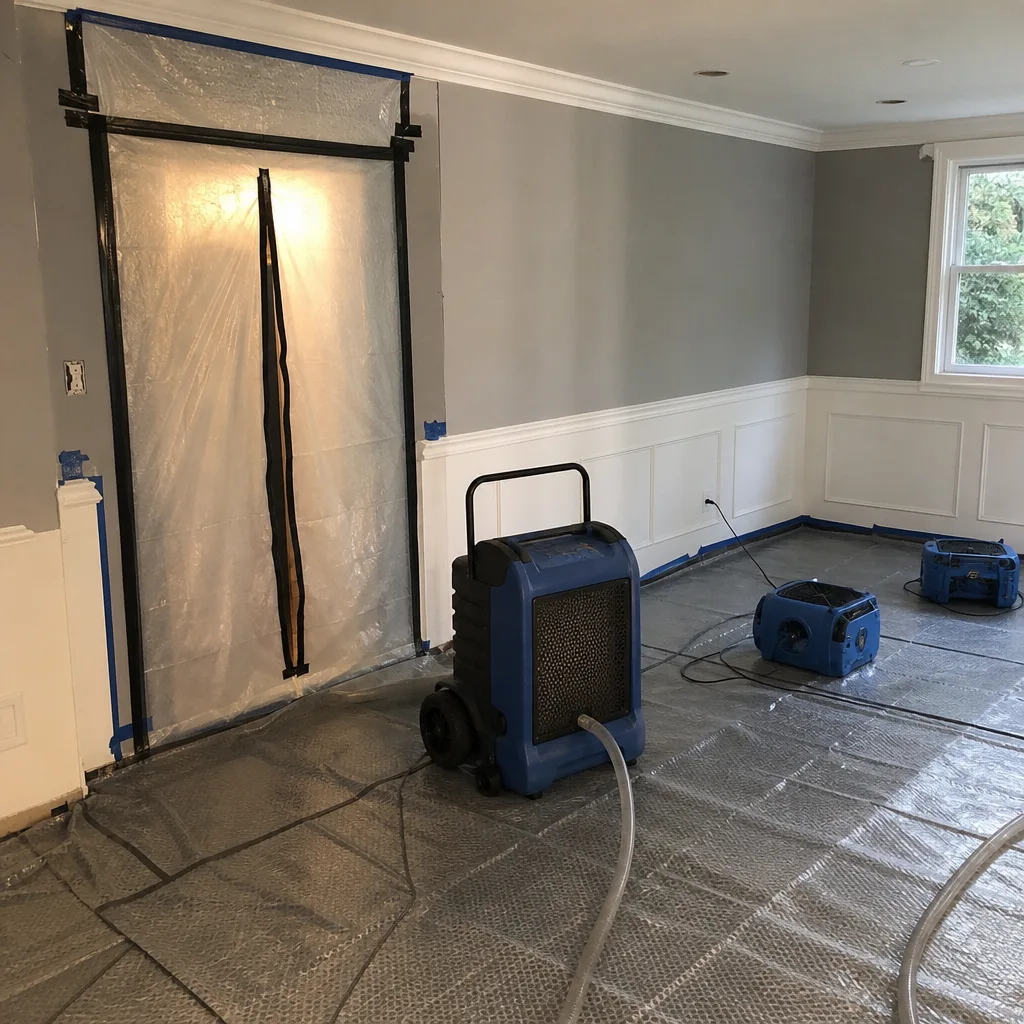 After
After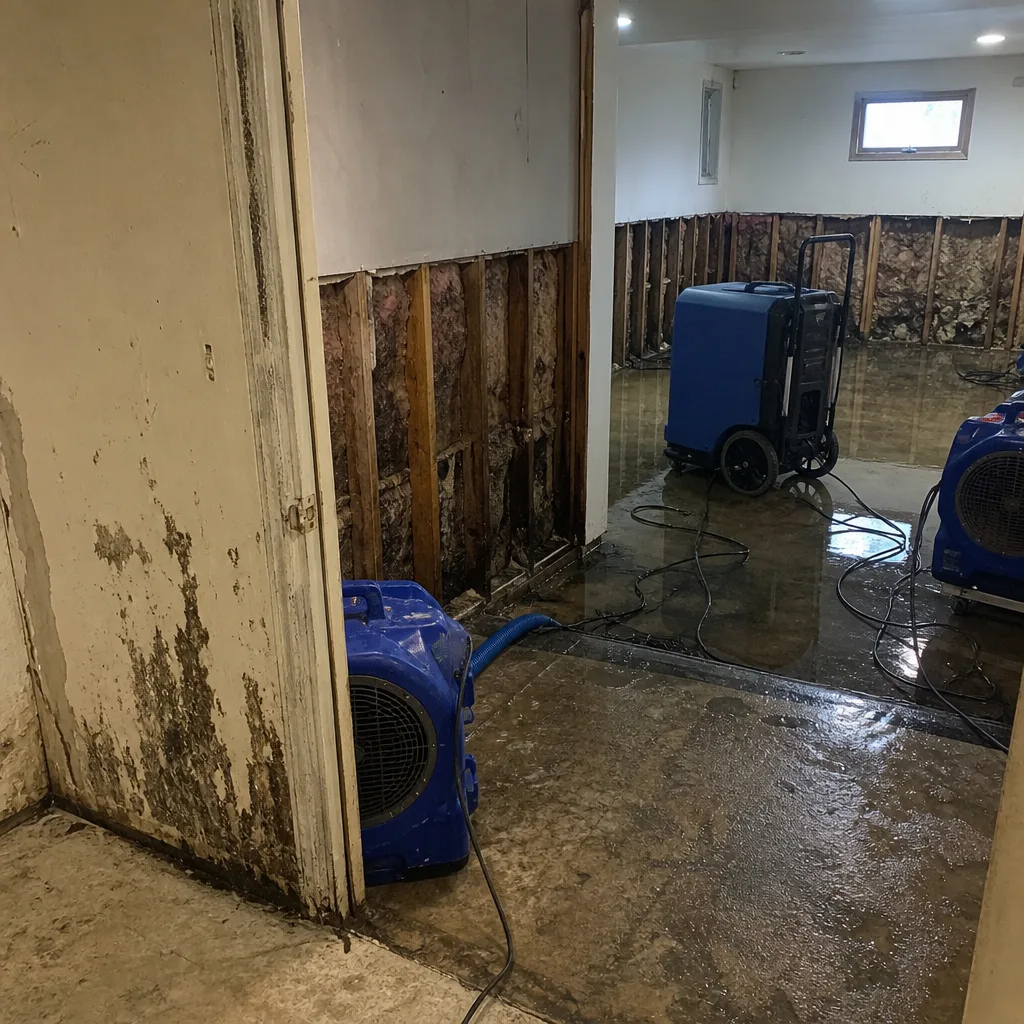 Before
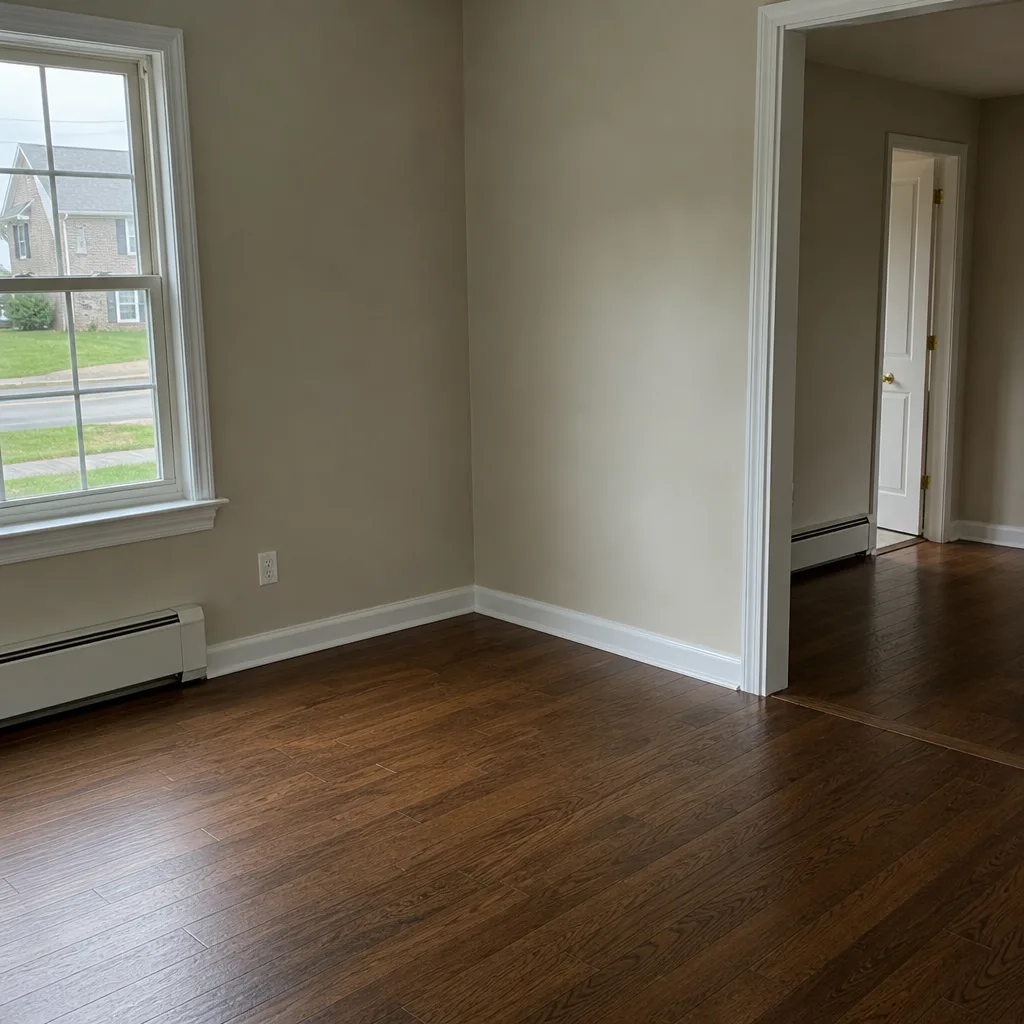 After
AfterWhen to Call a Professional
Call a professional if the water has been present more than 24 hours, if the source is anything except a clean supply line, if you can see water lines on walls or baseboards, if the flooring surface is bowing or swelling, if the affected area is larger than one small room, or if you’re filing an insurance claim and need documentation that will hold up. Time is not on your side in any of these situations, and the cost of professional drying is almost always lower than the cost of the mold remediation that follows a failed DIY attempt. If you’re still weighing options, our How to Hire a Damage Restoration Contractor in Hempstead: A Step-by-Step Guide covers what to ask before you call.
Wendell Restoration Hempstead home services the entire town of Hempstead and surrounding Nassau County neighborhoods. We offer free estimates, written pricing before any work begins, and a live arrival time you can track like a rideshare. Call (516) 559-6972 and a real person answers, any hour, any day.
Frequently Asked Questions
Professional water damage restoration in Hempstead typically costs $1,800 to $4,500 for a single-room water event including extraction, commercial drying equipment, and moisture monitoring. Larger areas or Category 2 and 3 water involving sewage or groundwater run $4,000 to $12,000 or more depending on scope. Call (516) 559-6972 for a written estimate specific to your situation, no charge for the estimate.
Only if the water is Category 1 clean water, has been present for under 24 hours, has not penetrated walls, insulation, or subfloor, and the room is not humid beyond normal. In Hempstead’s climate, that combination is rare in anything beyond a small surface spill. If any factor fails, DIY drying leaves the structure wet and creates mold conditions.
Most homeowners policies in New York cover sudden and accidental water damage from burst pipes, supply line failures, and appliance overflows, minus your deductible. They also require “reasonable mitigation,” which means professional-standard drying. The burden is on you to document that you acted promptly and correctly. Professional restoration provides the moisture logs and photo records your adjuster expects.
Wendell Restoration Hempstead answers calls live 24/7 and can typically have a technician on site within 60 to 90 minutes for water emergencies across Hempstead, Uniondale, East Meadow, and surrounding Nassau County areas. You get a live arrival time when you book, not a four-hour window.
Water damage restoration is the drying and mitigation process that happens in the first days after a water event, aimed at preventing mold from ever starting. Mold remediation is the removal and treatment process for mold that has already established. The two services connect because failed or delayed drying is the most common cause of mold growth in Hempstead homes. See our Mold Remediation in Hempstead page for the remediation side.
Visible water is usually the smaller share of the total. Water that has penetrated drywall, baseboards, flooring, or insulation is invisible water, and it’s the water that causes structural damage and mold. If the water event only touched a non-porous surface like tile or sealed concrete and dried within hours, a cleaning may be enough. If any porous material got wet, full drying is the only option that protects the structure and your insurance claim. Call us at (516) 559-6972 if you’re unsure, and we’ll tell you honestly whichever answer fits your situation.
The Bottom Line
The DIY-vs-professional decision in Hempstead water damage comes down to three facts you can check yourself: what the water is, how long it’s been there, and whether it got into the structure. Clean water, caught early, on the surface only is a defensible DIY case. Anything else is a professional drying situation, and in Hempstead’s humid summers with older housing stock, the margin for DIY error is thin. The cost of commercial drying is a known number, and it’s lower than the mold remediation bill that follows a failed DIY attempt. When in doubt, call, get a written price, and decide with real numbers in front of you. You can also explore more guides & resources on protecting your Hempstead home.
Written by Blake Sorensen, Owner at Wendell Restoration Hempstead, serving Hempstead since 2006.